Get Full Government Meeting Transcripts, Videos, & Alerts Forever!
Get email alerts on the Historical Programming topic
No spam. Unsubscribe anytime.
Theatrical reading and town‑meeting reenactment examines Concord's 1776 choice on independence
Summary
Freedom's Way presented 'Declaring Independence Then and Now,' a public performance that reenacted a 1776 Concord town meeting, read large portions of the Declaration of Independence, and staged a voice vote supporting the quest for independence as an educational civic program.
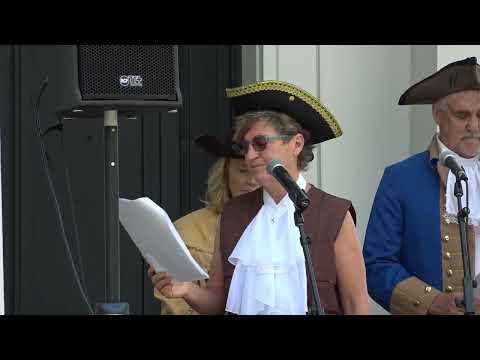
Freedom's Way National Heritage Area hosted a public performance titled "Declaring Independence Then and Now" at Wright Tavern in Concord that reenacted an 18th‑century town meeting and read significant portions of the Declaration of Independence. Desiree Demski Hamlin, deputy director of Freedom's Way, introduced the program and Tom Wilson, chair of the Wright Tavern Legacy Trust, served as narrator. The program used 18th‑century first‑person accounts and living‑history performers to explore how towns in Massachusetts debated independence in 1776.
Presenters recited excerpts from contemporary town records and newspapers, including a reading that cited the Essex Journal (May 18, 1776) describing the General Counsel's opinion that towns should advise whether they would support independence. Performers read the Declaration's preamble, a list of grievances against King George III and Parliament, and the formal declaration that the united colonies "are, and of right ought to be, free and independent states." The reading was framed with local history references to Reverend William Emerson reading the Declaration from his pulpit and town clerk Ephraim Wood copying it into Concord's town records.
Audience members participated in the reenactment: one former selectman, John Flint, identified himself as neutral and cited concerns about reprisals experienced by Loyalists; other attendees raised objections that the original Declaration did not address enslaved people or women's rights and urged respectful language regarding Indigenous peoples. Following discussion, the narrator proposed a motion—"We support the quest towards declaration"—which was seconded and taken as a voice vote. The moderator declared the motion accepted in the context of the performance and invited attendees to continue the conversation at Wright Tavern.
The program was presented as educational public programming rather than a legal or governmental action. It aimed to place the Declaration and the town‑meeting process in historical context and to prompt contemporary reflection about whom the 1776 debates included and excluded. No formal municipal decision or official legislative action occurred as part of the event; it concluded with audience discussion and social gathering plans.