Get Full Government Meeting Transcripts, Videos, & Alerts Forever!
Get email alerts on the Education And Service Area Funding topic
No spam. Unsubscribe anytime.
Kenai Peninsula Borough mayor tells Seldovia council the state's school funding formula is "broken," backs pool pilot
Summary
Kenai Peninsula Borough Mayor Peter Michicky told Seldovia's council that the state's base student allocation needs rewriting, outlined how Seldovia's property tax dollars flow to service areas and schools, and said he would back a one-year service-area pilot to fund a community pool if numbers add up.
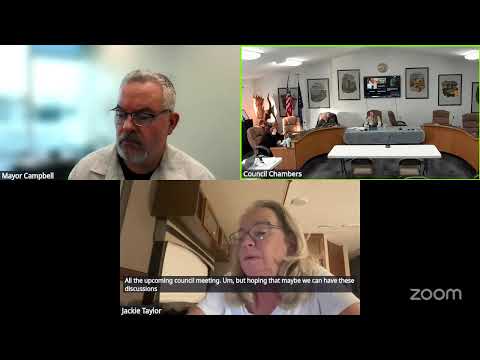
Kenai Peninsula Borough Mayor Peter Michicky told the Seldovia City Council on March 23 that the state's base student allocation (BSA) formula is "broken" and said borough and local leaders should seek a temporary freeze while the state rewrites the formula. Michicky, appearing by video before the council after a rules suspension, said the borough has worked to keep its mill rate low and aims for a long-term funding curve of about 2.5 percent.
"The state must correct what's broken about the BSA," Michicky said, adding that the borough is seeing roughly 3,600 fewer students compared with a historical peak and that homeschooling and other shifts have created an estimated $13 million in annual "leakage" in school revenues. He said those changes make it harder for the borough to meet education costs without adjusting local policy.
Why it matters: Michicky's remarks speak to local budget pressures that affect service decisions across the Kenai Peninsula. Council members pressed him specifically about whether Seldovia receives a fair share of taxes levied on the East Side of Kachemak Bay and how service-area funding could be used to keep a community swimming pool open.
Michicky provided a rough breakdown for Seldovia: he said the borough collects about $700,000 in property taxes at current valuations from the community, with portions designated for schools and service-area fees (he named figures in his remarks, including amounts tied to school capital and road service areas). He said smaller communities often receive a larger proportion of services per taxpayer because large population centers produce most service revenue.
On pool funding, Michicky said the service-area model can work for a one-year pilot if the community narrows the service area and the numbers are credible. "I'm still willing to support an experiment, if you will, a pilot program," he said, adding that the borough would not want to put services at risk if the model failed.
Michicky also answered questions about whether the proposed LNG project might boost school enrollment, saying the developer has discussed roughly 250 direct jobs and some peripheral activity, but he cautioned that any population effect would likely be gradual rather than an immediate boom.
City Manager Heidi and other council members asked follow-up questions about how service areas interact with the borough's funding to the school district and whether contracting or grant partnerships might reduce the mill-rate impact. Michicky suggested exploring grants and tribal partnerships for small-dollar projects and said the borough staff can help with grant administration.
What happens next: Council members said they will continue to refine cost estimates for any pool pilot and asked Michicky and borough staff to continue coordination. There was no formal vote on pool funding; Michicky's visit was an informational presentation and Q&A.