Get Full Government Meeting Transcripts, Videos, & Alerts Forever!
Get email alerts on the Elections Infrastructure topic
No spam. Unsubscribe anytime.
Dare County staff review ballot-on-demand printers as staff weigh costs, security and rollout
Summary
County elections staff heard a Printelec demonstration of a ballot-on-demand printing system designed for early voting and absentee ballots; staff will gather cost quotes, sample reports and security details before taking a funding request to county commissioners.
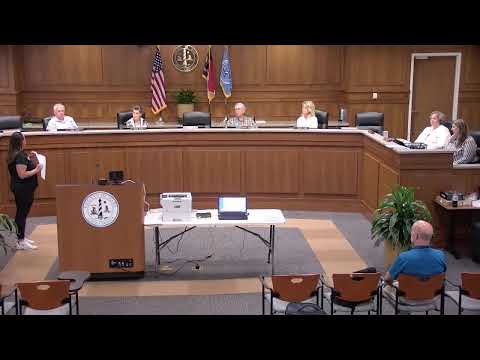
At a special Dare County meeting, county elections staff and a Printelec vendor demonstrated a ballot-on-demand printing system intended for early-voting and absentee operations and said it could reduce wasted preprinted ballots and improve ballot-style accuracy.
County staff framed the session as an informational presentation; no procurement decision was made. Staff said they will request detailed quotes and technical documentation, consult finance, and then present a funding request to the county commissioners for consideration.
The Printelec representative described the Valet On Demand system as already in use in multiple North Carolina counties and as most efficient for early voting and absentee processing. The vendor said the system links a dedicated laptop ‘server’ to printers programmed with a voting-system-specific firmware and prints ballots on demand in the correct style for a voter’s precinct. “This takes all of that possibility of a poll worker not writing or not writing accurately,” the Printelec representative said, describing how the system helps ensure retrievability for challenged or provisional ballots.
County staff and board members pressed vendors on integration and upgrades to state voter systems, firmware origin and ongoing costs. The presenter said the special firmware used to produce two-sided, election-specific output was provided to voting-system companies by the printer manufacturer and that Printelec supplies system images and helps counties with upgrades. The vendor said software updates and some compatibility assistance are typically provided as part of the product support, though a separate annual software licensing fee applies.
Officials asked about physical and cyber security. The vendor said wireless features are disabled in the shipped firmware and that hardware is intended to be hardwired on a protected local area network. The system includes a router with layered firewalls and user accounts; presenters said counties commonly lock laptops in secure rooms overnight or place them in lockable cabinets at early-voting sites. The vendor also identified optional lockable enclosures and other hardened mounting hardware to secure equipment at multi-day sites.
Staff and vendors described contingency plans: sites would receive extra printers so print jobs can fail over to another device, and counties would continue to keep preprinted ballots as backups. The system can also print a visible ‘review’ box to mark provisional ballots so tabulators will not accept them, and vendors said the product produces detailed, timestamped print logs and reconciliation reports that can be exported to a flash drive for county auditing.
Attendees discussed operating costs and supplies. The vendor estimated printers at about $800–$900 each, laptops at several thousand dollars apiece, and ultra-high-yield toner cartridges at about $150; drum replacement cycles were described as typically lasting two-to-three toner cartridges depending on coverage. Presenters said Printelec keeps critical consumables stocked in regional locations to reduce resupply delays.
Timing and rollout were discussed as staged steps rather than an immediate countywide replacement. Vendors estimated an eight- to ten-week lead time to procure, program, deliver and train staff, and recommended piloting the system in municipal or select early-voting sites before any broader county implementation to reduce risk and training burdens.
Kelly, the county staff member who opened the presentation, told the board the next step will be for vendors to provide a written proposal and sample reports; staff will review costs with finance and then, if appropriate, bring a formal request to the commissioners. No formal vote or contract award took place at the meeting. The meeting adjourned at 11:11 a.m.
(Reporting based on the meeting transcript; the record did not include a calendar date for the session.)