Get Full Government Meeting Transcripts, Videos, & Alerts Forever!
Get email alerts on the Artificial Intelligence topic
No spam. Unsubscribe anytime.
UN secretary-general says AI can be ‘‘greatest opportunity’’ and urges inclusive governance
Summary
At the World Artificial Intelligence Conference in Shanghai the secretary-general said AI ‘‘can be humanity’s greatest opportunity’’ but also ‘‘one of its greatest risks,’’ and emphasized expanding early‑warning systems to protect against climate disasters.
The United Nations secretary-general told attendees at the World Artificial Intelligence Conference in Shanghai that artificial intelligence ‘‘can be humanity's greatest opportunity in the 21st century, and it could also become one of its greatest risks,’’ and argued that ‘‘the technology that will shape the future of humanity must be shaped by all humanity, and it cannot be governed by a handful of countries or a handful of companies.’'
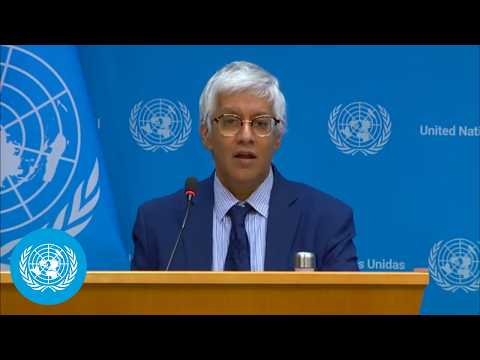
Farhan, the UN spokesperson, said the secretary-general toured China’s Mazu meteorological AI early-warning exhibit and attended a meteorological forum where he highlighted AI’s potential to help save lives. ‘‘Early warning systems are the most cost‑effective protection against climate disaster,’’ the briefing quoted the secretary-general as saying.
The spokesman cited statistics in the statement noting that ‘‘128 countries now have multi‑hazard early warning systems, more than double since 2015.’' The briefing also quoted an unclear figure—‘‘0.333 remain unprotected’’—which the briefing did not clarify; the UN statement did not provide an alternate explanation for that figure in the session transcript.
The secretary-general linked AI’s promise to sustainable development but warned that technological advances will not benefit the many if ‘‘the historical injustices of the past are repeated in the technologies of the future.’' The remarks underscored the UN’s call for broader, multilateral engagement in designing AI rules and tools rather than leaving governance to a narrow set of actors.
The briefing did not announce new UN rules or a timeline for AI governance; it described current discussions and emphasized international cooperation and investment in early‑warning capacity as concrete areas where AI can deliver benefits.