Get Full Government Meeting Transcripts, Videos, & Alerts Forever!
Get email alerts on the Surveillance Alpr topic
No spam. Unsubscribe anytime.
Residents urge Renton council to keep ALPR cameras off, demand civilian oversight and data
Summary
Dozens of residents at a Renton City Council meeting urged the council to keep automatic license-plate reader (ALPR) cameras off, citing large image counts, unclear retention and third‑party access, and requesting independent audits and public reporting before any contract renewal.
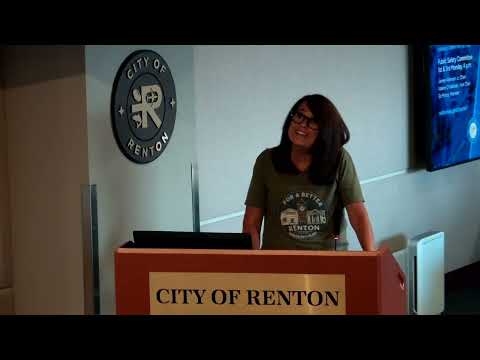
Dozens of Renton residents urged the City Council on July 13 to keep automatic license-plate reader cameras (ALPRs) off and to require independent oversight and public reporting before the city renews any contract.
"These cameras should be kept off until meaningful civilian oversight is in place," said Brandon Conley, a Renton resident and software developer, in public comment. Several speakers cited large data collections and questioned how the data have been used and how often it produced actionable results.
Cheryl Frieze told the council she had seen figures presented to residents that showed "5,000,000 images captured and only 390 law enforcement searches," and said that the lack of follow‑up statistics — for example, how many of those searches led to charges or convictions — made it impossible to assess whether the technology is effective. Frieze also pointed to apparent inconsistencies in published department materials about how many cameras are installed and where, and she said routine audits described verbally by staff were not documented in the department's written policy (policy 4‑32).
Other speakers raised constitutional and privacy concerns. James Needham cited recent Supreme Court rulings as context for Fourth Amendment protections and urged the city to consider litigation risk if it signs a new ALPR contract without more data. Andrew LoPriado said the city's web page about ALPRs largely repeats vendor marketing language and does not reflect device‑level security nuances, warning that statements like "data is encrypted on the device" omit how data are processed and thus can give a false sense of protection.
Health‑care providers warned of personal safety risks for patients. Ashley Fedan, a nurse who said she provides anesthesia at a regional clinic, said ALPRs could reveal where vulnerable patients travel for reproductive or gender‑affirming care and asked the council to weigh those risks.
Several speakers said the cameras are privately owned and the data are stored on third‑party servers, arguing that private control plus profit incentives increases the risk of misuse or sale of location data. Multiple commenters referenced independent reports and ACLU correspondence alleging that federal agencies have accessed ALPR networks in other jurisdictions.
Council members did not take a vote on ALPR policy at the meeting. A council speaker clarified during public comment that the cameras are currently off following an earlier council vote to pause the system. Residents asked for a clear record of how the city would measure effectiveness, documented audit practices, and a civilian body with the power to review the use of ALPR data and require regular public reporting.
What happens next: speakers urged the council to preserve the pause and to return with precise, documented answers — counts of investigations and outcomes tied to ALPR use, written audit schedules, and contract limits on third‑party access — before any contract renewal discussion or vote.