Get Full Government Meeting Transcripts, Videos, & Alerts Forever!
Get email alerts on the Surveillance topic
No spam. Unsubscribe anytime.
Residents raise privacy concerns about 'Flock' license‑plate cameras; police cite recoveries and arrests
Summary
Multiple residents at the July 15 meeting questioned Delhi’s use of ‘Flock’ license‑plate readers, citing Fourth Amendment and hacking concerns; the police chief defended the program, saying it contributed to more than $400,000 in recovered property and 73 arrests over three years.
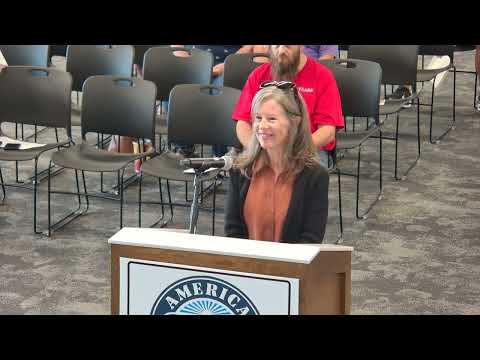
Several residents used the public‑comment portion of the July 15 Delhi trustees meeting to press the township about its use of Flock license‑plate‑reader cameras and related privacy and records questions.
Kurt Nortman told the trustees the cameras are a Fourth Amendment concern and pointed to other jurisdictions that have stopped using the systems. "This is about me wanting to protect my children's 4th Amendment right and not growing up in a state where there's nothing but police cameras everywhere," he said.
Trustees and staff pushed back with technical clarifications: a trustee noted Delhi’s devices are license‑plate readers (ALPRs) rather than continuous facial video, that plate reads are widely treated differently under existing case law and that plate data in township practice is retained for a limited period. The trustee suggested a resident meet with the police to see how the system actually works.
Chief Braun invited questioners to meet and said the department uses the cameras as an investigative tool governed by policy. "Since we've had these cameras ... we've recovered over $400,000 in recovered stolen property. 73 arrests were because of the cameras," the chief said, later adding the cameras aided in solving hit‑and‑runs, gun recoveries and drug investigations.
A separate exchange at the meeting included a resident noting a recent Supreme Court decision and a board member or participant clarifying the limits of that decision for license‑plate privacy. The meeting record includes competing claims about whether court rulings directly limit ALPR use; one speaker named a case and argued it did not address ALPRs specifically.
Other residents defended the cameras. Steven Howe said a Flock camera helped recover a neighbor’s stolen vehicle within two hours and urged trustees to keep the system in place. Rich Gages and others raised separate concerns about extensive public‑records requests and the administrative cost of large requests.
Trustees encouraged residents to meet with police for a demonstration and to ask for specific policy and retention details; they also noted that misuse is subject to disciplinary action. No policy change was adopted at the meeting, but trustees and staff agreed to follow up with questioners to provide demonstrations and clarifications.
The discussion included a mix of privacy concerns, technical clarifications about what ALPRs capture and how data are used, and immediate public‑safety claims about recoveries and arrests attributed to the system.