Get Full Government Meeting Transcripts, Videos, & Alerts Forever!
Get email alerts on the Workforce Disability Training topic
No spam. Unsubscribe anytime.
Christie Branson outlines Windmills disability-awareness training for North Carolina employers
Summary
Christie Branson, a program specialist with EIPD, presented Windmills — a free, 12-module disability-awareness training used statewide to shift employer perceptions, offer practical accommodation guidance and host an October public "encounter" panel. Slides and a recording will be posted.
Christie Branson, program specialist for business engagement with the Division of Employment and Independence for People with Disabilities (EIPD), told an Inclusion Works webinar that the Windmills disability-awareness training helps employers "shift perspectives" and reduce stigma about hiring people with disabilities.
Branson said the state agency offers the Windmills curriculum to employers statewide "at no cost," and that the program can be tailored for virtual or in‑person delivery. "Windmills is about shifting perspectives on disability," she said, describing the training as a way to move organizations from negative assumptions to inclusive practices that retain valuable employees.
The Windmills package includes a set of 12 modules that employers can mix and match depending on needs. Branson detailed popular modules and typical lengths: "Story" (30–45 minutes) as an introduction; the "Rumor Game" (about 30 minutes) on the harm of gossip; "Profiles" (about an hour) to confront hiring assumptions; "Encounter" (about an hour), a panel of people with a range of disabilities; "Reasonable accommodations" (about an hour), which Branson said emphasizes asking employees directly what they need; and the ‘‘Calendar Game,’’ a hands‑on scheduling exercise best suited to in‑person sessions. She also referenced the Job Accommodation Network (Ask JAN) as a practical resource for workplace accommodations.
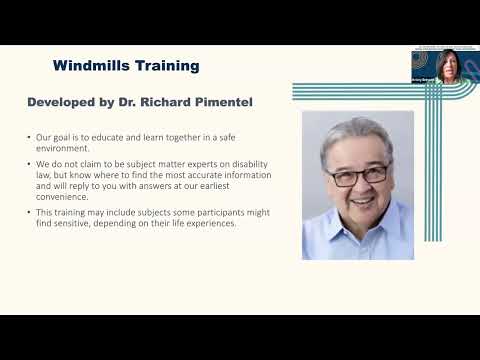
Branson said Windmills was developed by Dr. Richard Pimentel and that the curriculum continues to evolve. She noted the training "incorporates the language required from the Americans with Disabilities Act," tying the modules to federal nondiscrimination standards.
Claire Colligan, identified in the webinar as the IDD employment lead who introduced Branson, encouraged outreach and listed partner events and public opportunities to engage with Windmills. Colligan highlighted an employment resource fair hosted by Project Spark on Sept. 9 at the Carolina Pines Community Center in Raleigh, and said Inclusion Works will present an "Encounter" panel in October for National Disability Employment Awareness Month. Colligan also listed additional training dates for EIPD counselors (Aug. 28), a transition coordinators event (Sept. 17), an NCARF presentation (Sept. 18), an AHEC lunch and learn on Sept. 24 and the next Inclusion Works lunch and learn on Oct. 15 at noon.
Branson urged employers to view Windmills as a tool to create safer, more communicative workplaces. "The best way to really support an individual with a disability ... is to simply ask them, 'What do you need?'" she said. The webinar host said the recording and slides will be posted on the Inclusion Works website and that attendees can follow up via contact information on the slides.
The session concluded with an open Q&A invitation and instructions for accessing the posted materials.