Get Full Government Meeting Transcripts, Videos, & Alerts Forever!
Get email alerts on the Election Consolidation topic
No spam. Unsubscribe anytime.
UVA research finds consolidation likely to raise turnout; subcommittee asks counsel to draft two amendment options
Summary
University of Virginia researchers told the joint subcommittee that moving state and local elections onto even‑year federal ballots raises turnout and draws bipartisan public support, but members pressed presenters on ballot length, nationalization risks and local costs. The panel asked counsel to draft constitutional amendment language for two consolidation options.
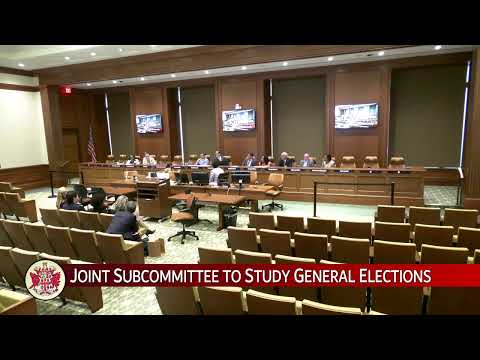
RICHMOND — University of Virginia researchers told the Virginia General Assembly’s joint subcommittee on consolidation and scheduling of general elections that shifting state and local contests onto even‑year federal ballots is associated with higher turnout and broad resident support, and the panel tasked legislative counsel with drafting constitutional amendment language for two consolidation options.
Jessica Kimpel Johnson, director of research at the Karsh Institute of Democracy at the University of Virginia, opened the presenters’ segment by saying, “Turnout increases with consolidation.” The UVA team described a mixed set of tradeoffs: higher participation especially among voters who historically turn out less, but potential increases in nationalization of state and local races and short‑term administrative costs for some localities.
The presenters offered both empirical comparisons and new Virginia polling. Jeremy Odrich, who reviewed comparative returns, said presidential‑year contests in one example state averaged about 62% turnout, midterms roughly 47% and standalone gubernatorial years about 37%, a pattern he said was mirrored in Virginia municipal consolidations under the law the presenters cited. Kara Fitzgibbon summarized a representative statewide survey of 1,000 Virginia residents, reporting that “57% of residents supported the idea of consolidation,” with 29% neutral and 14% opposed.
Panel members focused questioning on three core implementation concerns: whether longer ballots cause down‑ballot drop‑off or processing bottlenecks; whether consolidating on a federal cycle systematically advantages one party; and the short‑term cost and administrative burdens on local election offices. Presenters said the literature and their Virginia analysis show consistent increases in turnout after consolidation, but emphasized that partisan effects depend on local context and that the team would follow up with additional analyses and cross‑tabulations at the committee’s request.
Andy Block of UVA Law, who walked members through possible calendar options and term‑length tradeoffs, stressed that the researchers were presenting findings, not issuing policy recommendations: “We are not here to make a recommendation,” he said. Block and his colleagues outlined multiple sequencing options for governors, legislatures and local offices and noted that constitutional language would be required to change term lengths in some scenarios.
After extended discussion, the chair instructed Brooks Braun, the subcommittee’s legislative drafter, to prepare constitutional amendment language focusing on option 1 and option 2 (the committee asked not to prioritize options 3 and 4). Braun confirmed he would draft language that could include temporary term extensions or shortenings needed to align offices onto a new cycle and noted the larger legal work involved if local charters and boards are to be moved as well.
The subcommittee set drafting and research priorities for upcoming meetings — including analyses of drop‑off, recount incidence and partisan impacts after SB 11 57 moved local elections in some Virginia localities — and said it would workshop amendment text at the next meeting with the aim of an August vote on committee recommendations.
Procedural notes: the subcommittee reauthorized its electronic meeting policy by voice vote earlier in the session, and adjourned after opening a public‑comment period that produced no online speakers.
What’s next: researchers and the Department of Elections agreed to supply additional data and survey appendices the committee requested; legislative counsel will circulate draft amendment language for review ahead of the subcommittee’s editing workshop.