Get Full Government Meeting Transcripts, Videos, & Alerts Forever!
Get email alerts on the Epstein Files topic
No spam. Unsubscribe anytime.
Rules Committee pauses consideration of contempt resolutions for Clintons after last‑minute developments in Oversight negotiations
Summary
The committee postponed further action on bipartisan contempt resolutions recommending that William J. Clinton and Hillary R. Clinton be found in contempt pending review of fresh offers to testify and recent Department of Justice releases of Epstein‑related files; Oversight Chair Comer urged enforcement while Democrats urged interviews and transparency.
The House Rules Committee on [date] temporarily postponed further consideration of contempt resolutions related to the Oversight Committee’s Jeffrey Epstein investigation after members reported last‑minute outreach indicating potential willingness by the Clintons to appear for testimony.
Oversight Committee Chair Comer told Rules that the subpoenas issued to former President Clinton and former Secretary Clinton were lawful and that both individuals repeatedly delayed or refused in‑person depositions required by the committee. “Subpoenas are not mere suggestions,” Comer said, arguing that congressional oversight requires enforceable compliance.
Democratic members and Representative Walkinshaw, who testified in opposition to the contempt resolutions, said the Clintons had offered transcribed interviews and other accommodations, and that the committee should use interviews if they advance the investigation. Walkinshaw warned that rushing to contempt votes would foreclose an opportunity to gather additional information useful to the committee’s probe.
A secondary, and intensely disputed, line of testimony concerned the scope of the Department of Justice’s public release of documents from its Epstein holdings. Oversight witnesses and some members cited a public release of roughly 3,000,000 documents; others pointed to statements by Justice Department officials claiming a larger collection. Several survivors told members they believed redactions had been insufficient to protect victim privacy in recent releases.
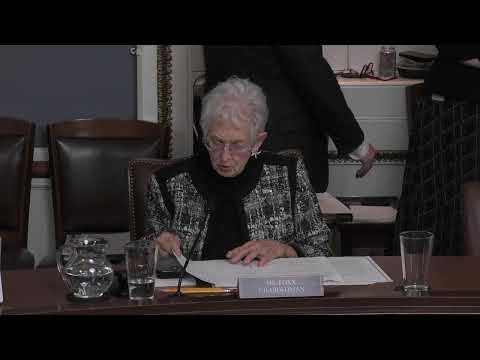
Given new correspondence that arrived during the hearing suggesting the Clintons’ counsel had offered terms for depositions, Chairwoman Fox called a recess so staff could review the materials. On return, the chair announced the committee would postpone further consideration of the contempt resolutions “to allow Oversight to clarify with the Clintons what they are actually agreeing to.” She said the committee would return if there was not “substantial compliance and agreement overnight.”
What to watch: Whether Oversight and the Clintons reach an agreement securing in‑person depositions (or a detailed, recorded interview), and whether the committee resumes consideration in short order. The question of how much additional material DOJ will produce publicly — and how redactions are handled — remains central to the investigation and to members’ calls for transparency.
By the end of the session, Rules left the contempt referrals in abeyance and tasked Oversight with clarifying whether the offers to testify would meet the committee’s evidentiary needs.