Get Full Government Meeting Transcripts, Videos, & Alerts Forever!
Get email alerts on the Appropriations topic
No spam. Unsubscribe anytime.
House Rules Committee approves rule to consider five appropriations bills amid heated debate over DHS funding and ICE
Summary
The House Rules Committee voted to report a rule for floor consideration of the Senate amendments to the Consolidated Appropriations Act after a day of partisan debate over a two‑week continuing resolution for Homeland Security, allegations of ICE misconduct and demands for enforceable oversight. The committee also rejected several Democratic amendments before approving the rule.
The House Rules Committee on [date] approved a rule to bring Senate amendments to the Consolidated Appropriations Act (HR 7148) to the floor after more than three hours of debate focused on whether to fund the Department of Homeland Security on a short continuing resolution or to press for broader reforms.
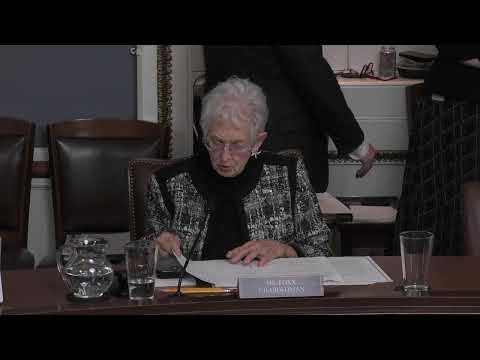
Chairwoman Fox opened the meeting by listing the measures before the committee and framing the day’s work around completing funding for the government. “Today, the rules committee is convening to consider 5 separate measures,” she said. The committee then heard from Appropriations Committee Chairmen and ranking members and took questions from members.
In testimony, Appropriations Chairman Cole urged members to approve the Senate‑amended package, which funds five of six FY2026 appropriations bills and places DHS under a two‑week or 10‑day continuing resolution. “Getting 90% of something is better than 100% of nothing,” Chairman Cole said, arguing that approving the altered package would keep paychecks flowing to service members, researchers and federal workers.
Democrats pushed back, focusing much of their remarks on recent incidents in Minneapolis where two people were shot by federal agents. Ranking Member McGovern said he would vote against the funding package unless the committee and the House demanded enforceable reforms to prevent further abuses. “I will be voting no on this funding package. I refuse to send another cent to Stephen Miller or Kristi Noem,” Ranking Member McGovern said, adding that members must protect civil liberties and ensure accountability for federal agents.
Several members emphasized the tradeoffs at stake. Representative Scott warned that the continuing resolution affects Coast Guard and FEMA operations as well as immigration enforcement, while other members argued that holding the entire government hostage over one dispute would harm ordinary Americans.
After extended questioning and several member amendments, the committee conducted roll‑call votes on proposed changes to the rule. Representative Scanlon’s amendment to prohibit use of funds to detain or deport certain TPS recipients failed on a recorded vote (4 yeas, 7 nays). A separate amendment to create a private cause of action when CBP or ICE officers violate constitutional rights also failed (4 yeas, 8 nays). Representative Jack moved the final rule; the committee agreed to report the rule on a recorded roll call (8 yeas, 4 nays).
The approved rule makes in order consideration of the Senate amendments to HR 7148, H.J. Res. 142 (disapproving a District of Columbia tax conformity law), and HR 4090 (the Critical Mineral Dominance Act), establishes debate times and waives certain points of order as described by the motion.
The committee also postponed further consideration of contempt resolutions related to the Oversight Committee’s investigation (see separate article) to allow staff and counsel to review late‑breaking correspondence. Chairwoman Fox said the committee would reconvene if negotiations did not produce substantial compliance overnight.
What happens next: With the rule reported, the House will receive the committee’s recommendation and may consider the measures on the floor under the terms the committee adopted. Floor debate is expected to address the same questions aired in Rules: how to balance funding priorities with demands for enforceable accountability for ICE and DHS operations.
Votes at a glance: Representative Jack’s motion to report the rule passed on a recorded vote (8 yeas, 4 nays). Representative Scanlon’s amendment was rejected (4 yeas, 7 nays). Representative Leisure Fernandez’s amendment to create civil liability for CBP/ICE constitutional violations was rejected (4 yeas, 8 nays).
The committee adjourned after completing the votes and said it would reconvene on short notice if additional information required further action.