Get Full Government Meeting Transcripts, Videos, & Alerts Forever!
Get email alerts on the Parking Policy topic
No spam. Unsubscribe anytime.
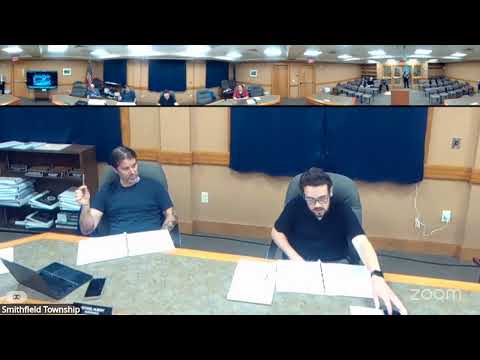
Board weighs referencing ITE parking manual; members cautious about cost and impact on small developers
Summary
The board discussed a Monroe County recommendation to drop the township's internal parking schedule and instead reference the ITE parking-generation manual to keep standards current; members raised practical concerns including access to the paid manual and effects on mom-and-pop developers.
The Smithfield Board of Supervisors reviewed a recommendation from the county planning commission to remove the township's embedded parking schedule and direct applicants to the most recent ITE (Institute of Transportation Engineers) parking-generation manual.
Advocates said referencing ITE would keep the code current without frequent ordinance amendments. "If you want to do that, you can," one planning representative said, noting the manual is periodically updated. Others warned the manual is not free and that smaller developers would need engineers to prepare studies. "It's not free," a board member said, emphasizing that referencing a paid manual creates access and equity concerns for applicants.
Members asked staff whether the code should offer options: retain the local schedule as one permissible standard, allow the ITE manual as an alternative, or permit applicant-specific parking studies. The board also agreed any parking reductions must still meet the Americans with Disabilities Act (ADA) requirements and discussed preserving accessible parking as a proportion rather than a fixed number.
No ordinance vote was taken; staff will revise the draft language to clarify how the ITE manual would be referenced, whether the ordinance should provide alternative compliance paths, and how ADA and reserved parking requirements will be preserved.