Get Full Government Meeting Transcripts, Videos, & Alerts Forever!
Get email alerts on the Early Numeracy Rule topic
No spam. Unsubscribe anytime.
Advisory council recommends temporary rule to let 4‑year‑olds receive early numeracy instruction
Summary
An advisory council recommended by consensus that the Board of Public Education pursue a temporary rule (10.54.903) so districts can enroll eligible 4‑year‑olds in fall early‑intervention classrooms that include both literacy and numeracy; the council outlined a compressed June–August rule timeline and a summer work plan to develop evaluation methodology.
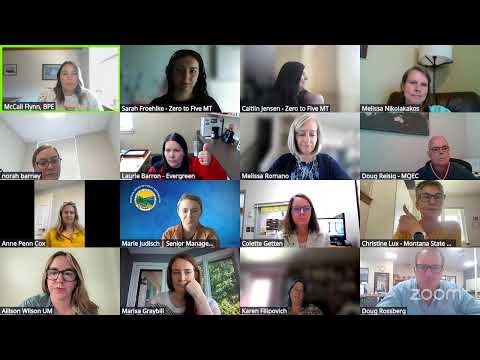
McCall, an advisory council member who led the meeting, said the council had to move quickly to put a temporary rule in place so school districts can begin serving eligible 4‑year‑olds this fall.
The council recommended, by consensus, that the Board of Public Education pursue a temporary rule (drafted as 10.54.903) that would place early numeracy language into the existing early‑literacy/target intervention subchapter and allow districts that assessed children in April–June to enroll eligible students in early‑intervention classrooms this fall and include both English language arts and mathematics content standards.
"We have until June 17 to file a rule with the secretary of state," McCall said, walking the council through a compressed schedule that includes public comment June 27–July 18, a virtual public hearing July 18, board final action on July 25 or 28, filing the adoption notice July 29, publication by the secretary of state Aug. 8 and an earliest effective date of Aug. 9 if the timeline is met.
Two bill sponsors on the council confirmed the legislative intent. "My intent was and still is that a student would not need to qualify for both interventions to be served," one sponsor said, adding that a child who qualifies under literacy could still receive instruction that includes numeracy. Another sponsor echoed that students should receive both supports even if they qualify under just one standard.
McCall said the draft rule is intended to be temporary for the 2025–26 school year and that the advisory group must develop an early‑numeracy evaluation methodology this summer so the rule can be revised for subsequent years. "This rule really is meant to still be temporary," McCall said, noting the council expects to bring a fuller recommendation to the Board in September following additional summer meetings.
Members endorsed using the council's prior consensus process to make the recommendation, with Lance Melvin suggesting that, "in the absence of an objection, noting that the group approved it unanimously" to reflect broad agreement. Christina, speaking for a higher‑education work group, said the content standards were adapted from reviewed Montana early learning standards and are developmentally appropriate for the targeted ages.
The council also discussed logistics: McCall said she will circulate dates for longer, back‑to‑back meetings in late July and early August to complete evaluation methodology work and crosswalk documents, and reminded members that the Board scheduled a special meeting at 8:30 a.m. on Monday the 16th to review any recommendation. The council then indicated no dissent and proceeded to recommend the draft temporary rule to the Board.
The meeting closed with a brief public comment period in which no members of the public spoke and a council member, Colette Gettin, expressing enthusiasm for returning classroom manipulatives to use in early numeracy instruction.
The advisory council's recommendation is advisory; final rule adoption depends on the Board of Public Education taking formal action according to the timeline McCall described.