Get Full Government Meeting Transcripts, Videos, & Alerts Forever!
Get email alerts on the Export Controls Ai topic
No spam. Unsubscribe anytime.
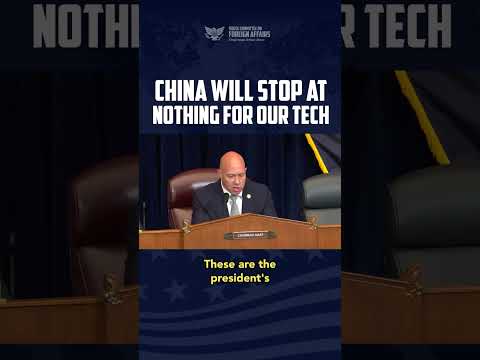
Chair frames AI competition with China as an urgent national-security priority at House Foreign Affairs hearing
Summary
The chair of the House Foreign Affairs Committee opened a hearing urging the Bureau of Industry and Security (BIS) to tighten export controls, add more Chinese-linked entities to the export-control list, and make faster licensing decisions to prevent China from accessing advanced AI technologies.
The chair of the House Committee on Foreign Affairs opened a committee hearing by telling Under Secretary Kessler the session was "about beating the Chinese Communist Party in the AI arms race," and said the U.S. must act now to prevent Chinese access to advanced AI technologies.
The chair framed the Bureau of Industry and Security (BIS) as "the tip of the spear" in U.S. efforts to protect sensitive technology and outlined four presidential priorities for BIS: preventing certain tools from reaching China, closing export-control loopholes cited in an "America First" trade memo, tightening controls on chip-making equipment (and preventing allies from undermining U.S. controls), and blocking Chinese military end users or remote access under cited national-security conditions.
The chair attributed warnings about frontier AI to national-security figures: he said CIA director John Radcliffe has likened frontier models' capabilities to "digital nuclear weapons," and he quoted a reference in the transcript to "secretary of war Pete Hegseth" naming CXMT and Alibaba as Chinese military companies. The chair also asserted that China "already unleashed COVID on us" and raised hypothetical biosecurity and missile-defense risks as part of his explanation for urgent action; those statements were presented as the chair's claims during opening remarks.
The chair praised prior BIS enforcement, noting successes such as blocking license approvals for blacklisted companies, but said more is needed: he told the Under Secretary that BIS had not added entities to the export-control list in 2025 since October 2025 and urged adding more entities. He also pressed BIS to make licensing decisions, including denials, promptly and to provide clearer guidance to American businesses.
The chair said the House Foreign Affairs Committee has "marked up more than 20 export control bills" to implement the stated presidential guidance and expressed support for increased BIS funding to meet those objectives.
The chair closed by thanking Under Secretary Kessler for appearing and saying he looked forward to hearing the Under Secretary's testimony.
Claims in this opening were presented by the chair and are reported here as assertions made in the hearing transcript. The hearing proceeded to receive testimony from Under Secretary Kessler following these opening remarks.