Get Full Government Meeting Transcripts, Videos, & Alerts Forever!
Get email alerts on the Artificial Intelligence topic
No spam. Unsubscribe anytime.
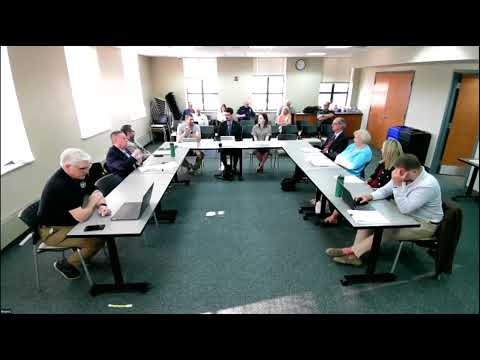
Mount Lebanon commissioners hear AI demo and outline municipal policy, resident input and training plans
Summary
Staff demonstrated a local AI assistant and described current uses (security monitoring, document search, phone transcription). Commissioners were asked to set high-level goals; staff will draft a commission policy, propose resident outreach and may request budgeted staff support.
Mount Lebanon commissioners on a weekly discussion session received a multi-part presentation on municipal uses of artificial intelligence and a proposed governance framework. IT manager Nick Schalles demonstrated a local, FAQ-driven assistant and described AI already in municipal service: automated road-condition analysis, server-log anomaly detection and video monitoring. "This is your Mount Lebanon AI assistant," Schalles said during the after‑hours receptionist demo, noting the prototype uses locally hosted data and is proof‑of‑concept.
The presentation, led by a staff member identified in the transcript as Ian with support from summer intern Katie Campbell, emphasized a two-layer policy approach: a commission-level statement of goals and an administrative policy for day‑to‑day staff usage. Katie Campbell told commissioners consultants recommended defining generative versus predictive systems and applying a three-tier risk model (low/medium/high) to future procurements and vendor integrations. She said low‑risk items would be curated, localized systems with no automated decision‑making, while higher‑risk systems would require opt‑in/opt‑out and continuous review.
Commissioner Flynn and others pressed on transparency and data security, especially when vendors or third‑party providers add AI components. Flynn said staff should ensure that data collected from municipal cameras or vendor systems remains internal when appropriate: "It better stay internal," he said, arguing that residents have a right to know how municipal data is used. Staff repeatedly emphasized human verification: administrative policy requires staff to review and approve any AI‑generated draft before it becomes public.
Nick Schalles demonstrated features planned or being beta‑tested, including automated voicemail transcription, AI note taking, a searchable document management upgrade that will run locally, and a limited after‑hours digital assistant drawn from a curated set of about 85 FAQs. Schalles said the municipal document system has been scanned and OCR'd since 2001 and the vendor's upgrade will add AI‑compatible indexing and search capabilities that run on local servers.
On governance, the presenters referenced a recent meeting with an outside cybersecurity/policy consultant (the transcript references this consultant as PIP Cyber/PITSIBR in multiple spellings). They recommended the commission adopt high‑level goals for AI use, publish transparency information for residents, and include vendors in the policy (to make clear how third‑party providers may use municipal data). Staff proposed a short web survey to collect resident priorities before or while drafting the formal policy.
Next steps: staff will draft policy language and return to the commission for direction on urgency, resident engagement and possible budgeted staff support to accelerate implementation. The presenters noted training for department heads and employees will be needed if the commission moves quickly to expand AI tools.