Get Full Government Meeting Transcripts, Videos, & Alerts Forever!
Get email alerts on the Deer Management topic
No spam. Unsubscribe anytime.
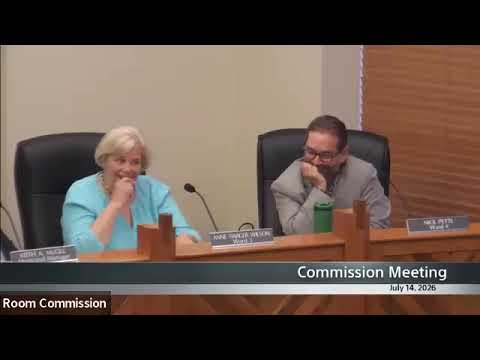
Mount Lebanon commission defends decade-long deer program as residents push back
Summary
Commission President Siegler defended the township's archery and sharpshooting deer-management program at the July 14 meeting, citing removal and collision figures; residents disputed some conclusions and urged attention to speeding and alternative approaches.
Commission President Siegler on July 14 defended Mount Lebanon’s decade-old deer-management program, saying the township has tracked deer-vehicle collisions since 2013 and that its archery and sharpshooting efforts—started in 2015—have removed 1,060 deer over 11 years and 113 in the most recent season.
"This program isn't new and we don't take it lightly," Siegler told the commission and attendees, summarizing what he said were data-based results. He said the program has reduced deer-vehicle collisions by "roughly 40%" from a 2016 high-water mark, estimated per-household costs at about $3.68 per year, and said venison from the program has provided food to local banks (the transcript records "over 15,000 pounds" contributed, producing an estimated 70,000 meals).
Why it matters: Siegler framed the program as fiscally modest, professionally managed and connected to tree- and understory-protection work cited in the municipality's forestry and invasive-species plan. The Parks Advisory Board, he said, formally endorsed the program because of vegetation damage and projected costs to protect plantings without herd management.
Public response: Resident Bill Hoon, who spoke during public comment, disputed the commission's emphasis on population numbers and said collisions are driven by vehicle speed, not necessarily by deer abundance. "The data shows that deer vehicular collisions are directly related to speed of the vehicles," Hoon said, and he described seeing deer behavior that he said suggested animals can and do avoid vehicles. Hoon referenced high-speed driving on Washington Road and questioned whether the commission's approach addressed the role of speeding.
At the hearing one participant (the transcript shows the same voice later identified as Commissioner Swagger Wilson) responded to anecdotal claims, saying, "With all due respect, the plural of anecdotes is not data," reflecting the commission's reliance on longer-term collision tracking and consultant oversight.
What the record shows and what remains unclear: The commission cited several quantitative figures in its statement (1,060 deer removed since 2015; 113 removed in the most recent season; a "roughly 40%" reduction from a 2016 peak). The transcript also records an estimated range of savings described by the president as "somewhere between 1.6 and $22,600,000" since 2016; that phrasing is inconsistent in the meeting record and the commission did not provide a clarified dollar range at the meeting.
Next steps: Commissioners did not take formal action to change the program at the meeting; discussion and public comment were part of the record, and the commission said it would continue monitoring outcomes and data in future sessions.