Get Full Government Meeting Transcripts, Videos, & Alerts Forever!
Get email alerts on the Shelter Funding topic
No spam. Unsubscribe anytime.
HOPE board warns shelters could close without new funding as county becomes regional coordinator
Summary
HOPE Advisory Board members were told an estimated $500,000 funding shortfall and changing state allocations threaten shelter capacity; staff urged board advocacy and described Benton County's new role as a Phase 2 regional coordinator for the statewide shelter program.
The HOPE Advisory Board for Benton County on July 8 was warned that a reduction in state shelter funding could force closures or cuts to local emergency shelters and that the county will assume new responsibilities as a regional coordinator under the statewide shelter program.
"It would take double the amount of shelter beds we currently have to actually bring everybody into shelter," public commenter Sean Collins said during the meeting's public-comment period, describing a sharp year‑over‑year rise in the point-in-time count and a large shortfall between people who need shelter and available beds.
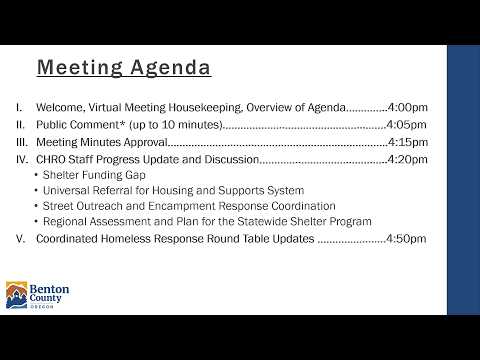
Staff said their point-in-time count shows about 570 people who need shelter while community shelter beds are roughly 300, and that the county faces an estimated $500,000 reduction in funding tied to shifts from pandemic-era investments and changes in state grant allocations. "That 500 is a little squiggly," a CRO staff member said, calling the figure an estimate that depends on a mix of prior COVID-era investments, House Bill allocations and other shifting resources.
Staff described Phase 1 of the statewide shelter program as preserving local planning bodies and Phase 2 as a competitive round; Benton County applied to and was selected as a Phase 2 regional coordinator to formalize the program locally. As regional coordinator, staff said the county will have additional reporting and contracting obligations while trying to align limited funds with community needs.
Councilor Jim Morrifield pressed staff for specifics about the $500,000 figure and where reductions are coming from; staff said the estimate reflects differences between earlier OPSS/HB funding and the Phase 1/Phase 2 allocations and pledged to work with shelter providers to refine the gap analysis.
Staff asked board members to use their networks to advocate at the state level and to help package targeted requests for the legislature and state agencies. Board members emphasized timing: advocacy packages are being developed this fall for the 2027 legislative session, and several members urged an interim meeting before October to focus solely on short-term funding and advocacy.
The board approved the April meeting minutes during the session and directed staff to return with more detailed analyses and advocacy options by email before the next regular meeting in October.