Get Full Government Meeting Transcripts, Videos, & Alerts Forever!
Get email alerts on the Code Enforcement And Registration topic
No spam. Unsubscribe anytime.
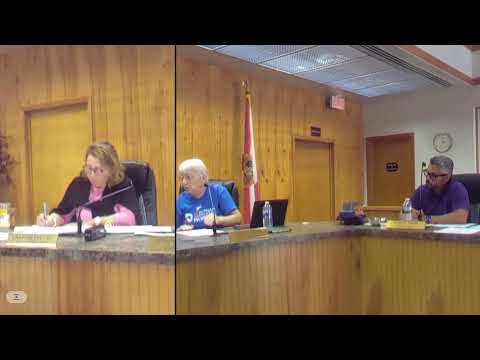
Commissioners debate enforcement, penalties and nonresident-owner registration during maintenance-code workshop
Summary
Commissioners questioned whether code violations should remain labeled misdemeanors or be recast as civil infractions, asked staff to consult the city attorney and county building department, and discussed nonresident-owner registration models and CRA match opportunities for housing rehabilitation.
Crescent City commissioners used a workshop on minimum maintenance standards to probe enforcement mechanics and explore tools to address vacant, foreclosed and nonresident-owned properties.
Why it matters: The legal framing of enforcement — whether code violations are prosecuted as misdemeanors or handled through civil procedures — affects whether the sheriff and county courts will be involved and determines the city’s administrative workload and potential costs for hearings and appointed magistrates.
Pamela Taylor, the city’s code enforcement officer and interim reporting clerk, summarized Florida’s historical approach: many code provisions remain categorized as arrestable misdemeanors under state statute, even though jurisdictions increasingly use civil citation processes. "All codes are misdemeanors and enforceable by law," Pamela said while explaining available citation mechanisms and the three-strike mandatory-court-hearing model used in some counties.
Commissioners expressed concern about the practical costs and logistics of criminal prosecution. One member noted that converting code enforcement to a criminal model would require the city to fund counsel and a hearing officer or magistrate and likely would not be feasible without county cooperation. Derek said staff will consult the city attorney and county officials before finalizing penalty language.
The commission also discussed nonresident-owner or vacant-property registration ordinances used elsewhere as a proactive tool. Commissioners reviewed sample ordinances from Broward, Miami and Palm Coast and discussed low-cost registration options; a Palm Coast model charging about $5 annually was highlighted as an example of a light-touch approach. Presentations at the workshop referenced a potential CRA match opportunity and an example $70,000 budget for housing rehabilitation partnerships that could be used to help low-income homeowners comply with exterior requirements.
Members raised specific enforcement cases: an eyesore property on Eucalyptus Street with an open building site and an outstanding permit was discussed as an example of how county permitting and permit suspensions during COVID complicated the city’s ability to force remediation. Derek and Pamela said they will contact the county building department to determine whether the city can press for administrative remedies or whether changes to intergovernmental agreements are needed.
Next steps include staff outreach to the city attorney and county building department on penalties and permits, research into other jurisdictions’ registration programs, and bringing back revised text and outreach materials for further commissioner review.