Get Full Government Meeting Transcripts, Videos, & Alerts Forever!
Get email alerts on the Zoning topic
No spam. Unsubscribe anytime.
Commission continues Central Business District rezoning after extended public comment
Summary
After detailed staff presentation and hours of public comment raising concerns about setbacks, parking, prohibited-business lists and administrative discretion, the commission continued the Central Business District small‑scale comprehensive plan amendment and rezoning to June 18 to allow more public review and revisions.
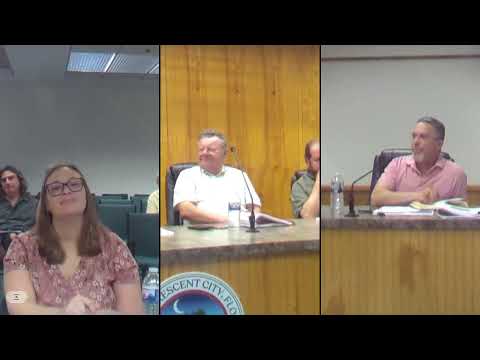
The Crescent City Planning & Zoning Commission continued a proposed Central Business District (CBD) small-scale comprehensive plan amendment and related rezoning to June 18 after an extended public hearing on May 4.
City staff presented the package as a tool to advance the downtown master-plan vision: the CBD would allow second-story residential over commercial uses, reduce minimum lot area requirements from about 10,000 square feet to 6,250 square feet, offer parking-relief incentives (up to a 100% waiver on Central Avenue in some cases) and allow administrative setback relief that could, in limited cases, bring buildings closer to the right-of-way. Staff said existing nonconforming structures and uses would be grandfathered.
The policy details prompted sustained questioning from commissioners and members of the public. One commissioner warned that reducing setbacks and narrowing sidewalks could harm pedestrian safety and aesthetics, noting the existing GC‑1 setback is 25 feet and that the CBD would allow setbacks as small as 10 feet or administrative reductions to 0 feet on Central Avenue. A staff planner responded that sidewalk width would be increased to six feet in CBD streetscape designs and that the district is intended to match a traditional downtown pattern rather than suburban commercial development.
Several residents told the commission they had not understood earlier outreach and objected to a list of prohibited uses and the broad discretion the city manager would have over signage and parking waivers. Scott King, who identified himself during public comment, told the board the list of prohibited businesses and manager-level controls felt "unacceptable" and warned that the rules could make it difficult to attract certain retailers.
Other public commenters urged the commission to slow the process so neighbors could review maps and materials, seek opt-outs where appropriate and consider clearer transition standards adjacent to residential neighborhoods. Multiple speakers asked whether the Miller School parcel would retain lake access; staff said the proposal left options open for part of the site to be mixed-use and part to remain public facilities to preserve lake access.
Following the public testimony and board discussion, a commissioner moved to continue both the small-scale comprehensive plan amendment and the rezoning to the commission’s June 18 meeting to allow staff time to prepare revisions and give residents additional review time. The motion was seconded and carried by voice vote.
Staff said it will return with revised language and additional materials addressing setbacks, parking, architectural compatibility and the prohibited-uses list for further deliberation on June 18.