Get Full Government Meeting Transcripts, Videos, & Alerts Forever!
Get email alerts on the Financial Health topic
No spam. Unsubscribe anytime.
Fed panel urges shift from access to measurable financial-health outcomes
Summary
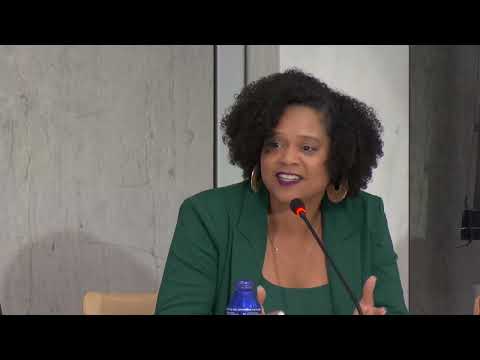
At a Federal Reserve Bank panel, practitioners from the Financial Health Network, GreenPath and Wright Patt Credit Union urged standard measurement, cross-sector partnerships, and product-level design to turn access into sustained financial-health outcomes; speakers highlighted GreenPaths automated safety-net savings product and Wright Patts homeownership pipeline.
Sean Krian, a moderator based at the Federal Reserve Bank of San Francisco, opened a conference panel by arguing that access to financial services alone does not guarantee better outcomes and called for a focus on measurable "financial health." "We can't belabor the point enough," Krian said, referencing FDIC survey data that he described as showing roughly 5% of American adults remain unbanked while many more who are "banked" lack positive financial outcomes.
Taylor Nelms, vice president for research and insights at the Financial Health Network, described the Networks FinHealth index and its eight indicators (positive cash flow, on-time bill payment, short- and long-term savings, credit score and debt manageability, insurance adequacy confidence, and planning). Nelms said nearly 31% of households are classified as financially healthy by that measure and emphasized mobility across tiers, noting about 23% of households move up or down a tier year to year. "Financial health is really dynamic for individual households," Nelms said, and added that richer transactional data and improved analytics have made continuous measurement more feasible.
Panelists described how institutions are turning measurement into action. Ivy Glover, director of community impact and development at Wright Patt Credit Union, traced credit unionspeople-helping-people origins and gave examples of programs Wright Patt has launched: certified coaching, a "save-to-win" incentive to help members reach an initial $500 in savings, a "wheels-for-work" program that addressed subprime auto-lending, and a partnership-backed "pathways to homeownership" initiative. Glover said the credit unions foundation provided a $1,300,000 seed investment for the homeownership effort; the first five homes have been completed and sold, and five more are expected by fall as the program aims to support up to 30 first-time buyers.
Kristen Holt, president and CEO of GreenPath, told a counseling case study to show how nonprofit counseling and debt-management can change outcomes. She described a client, "Kim," who came to GreenPath with about $23,000 in credit-card debt and an annual income just under $30,000. Through one hour of counseling and enrollment in a nonprofit debt-management plan that lowers interest and consolidates payments, Holt said Kims credit score rose to 700 in nine months and she remained current on bills. Holt contrasted nonprofit debt management with debt-settlement firms and announced GreenPaths upcoming safety-net product: clients who enter a debt-management plan can automatically enroll in a companion emergency-savings account that directs a minimum $25 per month to build liquidity while they repay debt.
On collaboration and data, Nelms framed financial-health data as a public good and described a new Financial Health Network working group that will develop shared frameworks for using administrative (account and transactional) data alongside survey work. "These are really powerful opportunities for cross-sector collaboration," Nelms said, noting financial institutionsinternal analytics have advanced but often lack a common vocabulary. Glover and Holt emphasized the role of trusted referrals (for example, credit unions pointing members to nonprofit counselors) and the need to coordinate "swim lanes" so each partner contributes its expertise.
Panelists also made a business-case argument: members and customers who say their primary financial institution supports their financial health are more satisfied, likelier to remain customers and buy additional products. Nelms cited Network analysis showing such customers are about three times more satisfied, three times more likely to recommend, twice as likely to stay long term and five times more likely to buy additional products.
An audience question asked about partnerships with schools and whether early financial literacy affects later outcomes. Ivy said Wright Patt provides a Kthrough— 12 state-aligned curriculum in Ohio and partners with local universities; Holt said GreenPath influences children indirectly through family budgeting conversations but does not directly partner with schools; Nelms noted the Financial Health Network does not yet have conclusive linked data about K12 programs and adult outcomes but pointed to academic researchers studying what works.
The conference closed with a staff member noting the Federal Reserve Bank of Boston has launched an inclusive payments resource center to help unbanked and underbanked households find safer, more affordable payment options. The moderator and panelists encouraged continued collaboration among researchers, financial institutions and community organizations to scale what works.
The panel highlighted measurement frameworks, specific pilot programs and cross-sector referrals as the most promising routes to move from access to sustained financial-health outcomes. Next steps discussed included coordinating shared data standards, piloting administrative-data measures with common definitions, and tracking program-level impacts on clients' financial-health indicators over time.