Get Full Government Meeting Transcripts, Videos, & Alerts Forever!
Get email alerts on the Facilities And Closure Policy topic
No spam. Unsubscribe anytime.
Wichita board hears public objections to school-closure timeline as district outlines facilities needs
Summary
At a Board of Education meeting, residents urged alternatives to neighborhood school closures while district staff outlined facility needs, quick fixes and a potential bond; the board approved the consent agenda 4–0 and deferred final closure decisions pending a full quorum.
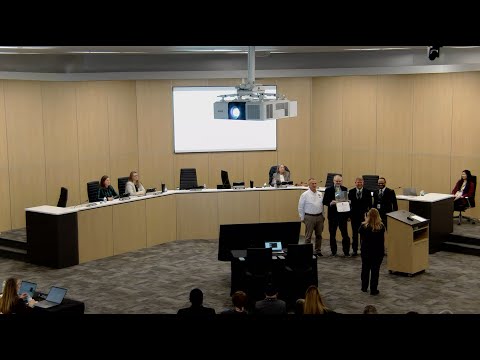
The Wichita Board of Education opened a hearing on possible action at Chester I. Lewis Academy after the district said it had received a public notice describing unsafe conditions at the site. The board heard public comment from parents and community members urging more community engagement and asking the board to delay closure timelines.
Speakers at the public-comment portion emphasized community alternatives and pushed for clearer information about the district's facilities estimates. Lavonta Williams, introduced by the chair, said: "If the structure is so bad that that is what has to happen, then that may be what needs to happen," but asked the board to consider community concerns before moving to closures. Public commenter Trish Eilman urged both a community-shaped process and support for a bond, saying, "I absolutely want this community to vote yes on the bond." Josh Frederick questioned the district’s framing of replacement costs, telling the board, "The $2,460,000,000 figure represents a full replacement model," and asking staff to provide a cost estimate limited to safety-, code- and imminent-failure work.
Why it matters: The comments came during a board workshop-style meeting in which the district framed long-range capital needs and short-term repairs. Community members stressed that neighborhood schools have value beyond capacity or cost figures and asked the board to explore renovation and other options before closures.
District presentation and staff findings: District staff described the results of a staff listening effort and early facility assessments as they refine a capital improvement plan. Staff told the board that about 3,843 faculty and staff attended listening sessions and that HVAC and aging infrastructure (leaky roofs, plumbing, electrical) were among the most frequently cited concerns. The presentation listed 42 "quick-fix" items (replacement ceiling tiles, HVAC shutdown issues resolved, air-quality items) that staff identified for immediate attention.
Staff also outlined next steps for inspections and prioritization. During Q&A, staff corrected a materials error about inspection status: they said Woodman had an inspection completed earlier this past fall and Woodland is scheduled for a March 2026 inspection, acknowledging that the printed materials had not been updated. The superintendent and staff emphasized that structural investigations for this phase will focus on the portions of school buildings that are 50 years old or older rather than automatically inspecting entire campuses.
Neighborhood schools and the board’s position: The superintendent addressed an underlying community concern that the district is "abandoning" neighborhood schools, saying the district is not abandoning the concept and that "there's still neighborhood schools. They're just neighborhood schools with a bigger boundary than they used to have." The superintendent reiterated that decisions will weigh multiple factors — safety, enrollment, staffing, programmatic needs and building condition — and said renovation, rebuild and targeted maintenance will all be considered where appropriate.
Public oversight and transparency concerns: Rebecca Armstrong, a recent participant in the district's financial oversight committee, said she was given a large accounting package but "never received any of the information I asked for," describing the oversight role she experienced as more spectator than decision-maker. Armstrong and others raised concerns about transparency and staff access to documents used in planning.
Votes at a glance: The board took one formal vote during the meeting: the chair moved to approve the consent agenda except for e1 (Diligent 7.0 / MASP support software); Stan moved and Julie seconded. The motion passed, "Motion carries 4–0," with no named votes recorded in the transcript.
What’s next: The chair said the board had hoped to finalize a closure timeline in February but prefers to wait for a full board quorum, expected in March, before taking final action. Staff said the district will continue the spring listening tour, follow up on quick fixes, complete scheduled inspections and refine project priorities through a community facility survey being run with a WSU research partner.