Get Full Government Meeting Transcripts, Videos, & Alerts Forever!
Get email alerts on the Noise Ordinance topic
No spam. Unsubscribe anytime.
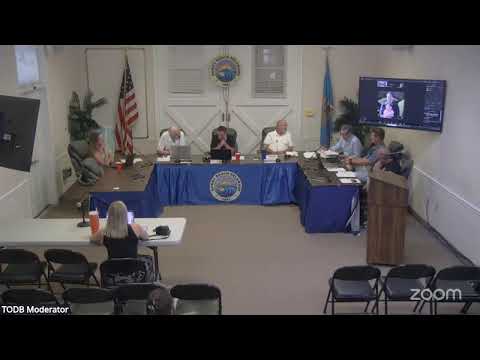
Dewey Beach council tables draft ordinance requiring permits for amplified sound after legal, public concerns
Summary
The Dewey Beach commissioners paused action on a draft noise ordinance July 17 after residents and attorneys raised concerns about broad discretion, lack of objective decibel standards, and unclear exemptions for permitted events; the council voted to revise the draft and return it next month.
The Dewey Beach town commissioners voted July 17 to table a draft ordinance that would require permits for amplified sound in public areas after public commenters and legal counsel urged clearer, more objective standards.
Town Manager Bill, introducing the measure, said the ordinance is intended to give police a tool to control unpermitted amplified music or loudspeakers on sidewalks, streets and the beach and to distinguish permit requirements from existing noise-violation enforcement. He noted that event permits already regulate amplified sound for approved special events.
Several council members and members of the public asked for revisions. Pat Wright, a volunteer organizer for local events, said the draft needed explicit language to exempt already-approved special events such as the town art show and other community gatherings. "I volunteer for a lot of these events," Wright said. "You should tweak this a little bit to make sure that it's included with the special events that have already been approved by the town." Wright urged the council to ensure the measure would not unintentionally restrict permitted events.
Attorney David Moskowitz told the council the draft was "currently unconstitutional" because, he said, it gives the town manager unlimited discretion and lacks narrow, objective permit standards. Moskowitz noted the ordinance contains no decibel limits, no measurement method, no decision deadline and no appeal procedure. "Any town manager could just sit on an application," he said, and "you actually have to measure decibels," adding that the current language could criminalize low-level devices like Bluetooth speakers when taken literally.
Town counsel responded that the draft was modeled on a similar Rehoboth Beach ordinance and that the proposed permitting regime would apply a content-neutral time/place/manner analysis; counsel said the ordinance separates the permitting requirement from the municipal noise-violation provisions and that revocation would depend on post-permit disturbance determinations. Commissioners pressed for clearer criteria or specific prohibited categories rather than leaving enforcement solely to staff judgment.
After the exchange, Commissioner Persinger moved to table the ordinance so staff could revise the language to address the public and legal concerns; the motion passed on a voice vote. The council directed staff to bring back a revised draft with clearer exemptions for permitted special events, objective standards or measurement guidance, and deadlines or appeal procedures.
The tabling leaves the current permitting regime for organized, permitted special events unchanged while the town drafts clearer language for unpermitted amplified activity in public spaces. The council expects to review a revised draft at its next regular meeting.