Get Full Government Meeting Transcripts, Videos, & Alerts Forever!
Get email alerts on the Rental Inspections topic
No spam. Unsubscribe anytime.
Eastlake committee debates phased rental-inspection program, seeks draft ordinance
Summary
Council members and the building inspector debated a phased program to inspect non-owner-occupied properties, proposing exterior inspections first (2026–27) with interior inspections added later (2028) to manage staffing and enforcement; the law director will draft sample ordinance language for the committee.
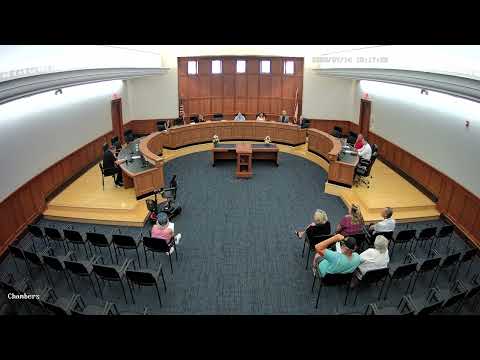
Council members and staff debated a phased inspection program for non-owner-occupied properties during the ordinance committee meeting on July 14. Building Inspector Dave Mann warned the department lacks both software and staffing to run a full interior-and-exterior rental-inspection program immediately and recommended starting with exterior inspections.
"The exterior is what everyone sees," said Dave Mann, the city building inspector. He told the committee his office currently operates as a building department with certified building inspectors and that adding interior inspections would require additional software, staff and a vehicle. Mann estimated one inspector had handled about 800 inspections in a previous program and gave a rough startup-capability cost estimate—"I could be crazy, I could be totally wrong, $1,525,000, maybe"—for adding program capability, noting the program could pay for itself over time but would be rough at startup.
Council members discussed timing and administrative workload. One council member proposed a phased schedule that would require only exterior inspections on the program’s first cycle and then add interior inspections on a later renewal—options floated included a 1-year exterior-only start with interior inspections after 1 cycle or a 2-year exterior-first approach followed by interior inspections. The chair suggested a compromise timeline: exterior-only inspections in 2026 and 2027 with interior inspections beginning in 2028 to allow the city time to identify software, hire or assign staff and accumulate fees.
Committee members pressed for concrete staffing estimates and enforcement plans. Mann said the city would likely need at least one dedicated employee, inspection software with tracking capability, and follow-up procedures for notices, re-inspections and court action when property owners fail to comply. He noted administrative tasks such as mailing notices, scheduling re-inspections and tracking compliance would create substantial ongoing workload.
The committee agreed to request a draft ordinance. A council member offered to prepare an initial draft using Willoughby’s program as a framework, and the law director was asked to return with model language and examples from other municipalities at the next meeting. The committee scheduled discussion of the draft for the first ordinance committee meeting after the council returns from the summer break, with the goal of moving toward an August meeting review.
Next steps: the law director will prepare draft ordinance language and the administration will return details on estimated software and staffing needs; the committee will review the draft at the first post-break ordinance meeting.