Get Full Government Meeting Transcripts, Videos, & Alerts Forever!
Get email alerts on the Tourism And Short Term Rentals topic
No spam. Unsubscribe anytime.
Kentucky Lake CVB tells Marshall County fiscal court it generated over $88 million in 2025 and flags Airbnb tax compliance issues
Summary
Laina Blevins of the Kentucky Lake CVB told the Marshall County Fiscal Court on July 16 that the bureau’s 2025 economic-impact estimate topped $88 million, highlighted rapid short-term rental growth from AirDNA data and said Airbnb has not been complying with Kentucky tax rules — a legal case was dismissed by the state Supreme Court for lack of standing.
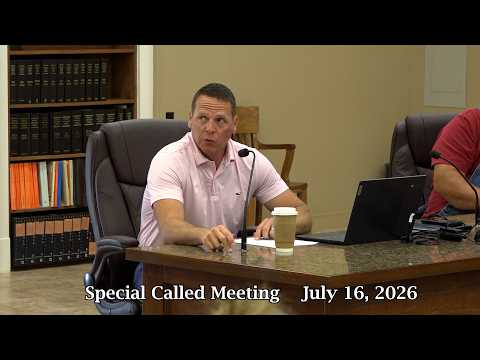
Laina Blevins, director with the Kentucky Lake Convention & Visitors Bureau, told the Marshall County Fiscal Court on July 16 that the bureau’s 2025 economic-impact estimate exceeded $88 million and that the county’s lodging ecosystem is changing rapidly because of short-term rentals.
Blevins said the CVB’s data show the short-term rental sector has expanded sharply over the past decade and that short-term rentals generated more than $4.4 million in fiscal year 2025–26. She said short-term rentals now make up about 22% of the CVB’s transient-tax receipts and that the county currently captures roughly 70–75% of the total short-term-rental transient tax owed to local governments.
"We generated over $88,000,000 for the county," Blevins said, summarizing the bureau’s headline numbers. She described marketing work the CVB has undertaken — hiring a new marketing manager, launching a podcast, increasing social-media outreach and optimizing content for AI-driven search — to attract drive-market and value travelers and to reach last-minute bookers.
Blevins also discussed the CVB’s contract with data firm AirDNA and the short-term rental compliance work that followed. She said AirDNA’s decade of data shows listings have grown dramatically and that a portion of transient-tax revenue is going uncollected, in her view, because "Airbnb is not compliant with Kentucky state law." Blevins said KLC and KTIA pursued litigation on behalf of members but that the case was dismissed by the Kentucky Supreme Court for lack of standing, leaving the underlying compliance question unresolved.
The CVB representative said the bureau is sorting through AirDNA dashboards to identify individual property owners the county can contact and noted the office prefers owners to list with platforms that collect and remit transient tax on behalf of hosts. She told the court the CVB will share its data and is prepared to assist if local legal action or county-level case studies are pursued.
Why it matters: transient-tax receipts fund local tourism promotion, events and some county programs. The CVB’s figures and its warning about nonremitted short-term rental taxes bear directly on the local budget forecast and on whether the county should pursue further enforcement or legal strategies.
Blevins closed by presenting the CVB’s FY2026 budget (income shown as $588,400), noting a small reserve line was added and that payroll rose with the new hire. She said the CVB is working with the treasurer’s office and a local bank on an online payment portal (ACH option) to make collection easier and less costly for property owners.
The bureau’s presentation also detailed sponsorships and events the CVB will support, including a Heavy Hitters Bass Pro Tour stop in 2027, and urged local event organizers to use the CVB’s new Yodle-powered online events calendar so county attractions and lodging activity can be captured and promoted.