Get Full Government Meeting Transcripts, Videos, & Alerts Forever!
Get email alerts on the Homelessness topic
No spam. Unsubscribe anytime.
State housing officials outline drivers of homelessness and funding risks in Salisbury briefing
Summary
Danielle Meister, assistant secretary at Maryland DHCD, told the Salisbury City Council on June 8 that homelessness is rising statewide and laid out local data and recommendations—housing‑first, better HMIS participation, rapid rehousing and applying for HUD and Medicaid funding—to help the city respond.
Danielle Meister, assistant secretary for the Division of Homeless Solutions at the Maryland Department of Housing and Community Development, told the Salisbury City Council on June 8 that homelessness has begun to rise again after COVID-era declines and urged local leaders to strengthen housing-first practices, data collection and service coordination.
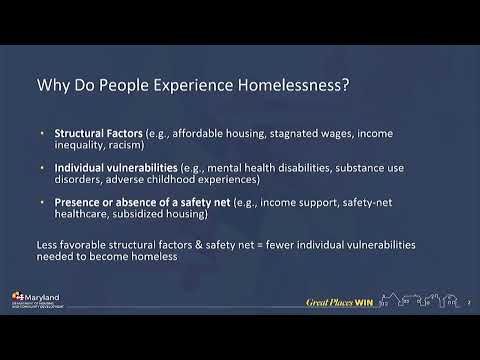
Meister summarized a daylong tour of five local providers and presented Lower Shore data (not city-specific) to explain drivers and service needs. She said the region’s housing costs are comparable to urban areas — citing two‑bedroom fair‑market rents of roughly $1,310 and $1,570 in sampled ZIP codes — and noted that higher rents and income shortfalls are major structural drivers of homelessness.
Meister also described eviction and shelter data: roughly 6,000 failure‑to‑pay rent filings in a recent fiscal year, about 22 warrants of restitution and 343 cases reaching eviction stages, which she said implies about 6% of filings progressed to eviction actions. She cautioned that much of the available data are at the Lower Shore or continuum level rather than at the city level.
Meister warned of an impending change in federal funding: “HUD’s competition that they just released is going to cut that funding by 40%,” she said, describing an expected reduction in CoC (Continuum of Care) permanent‑supportive‑housing capacity and urging Salisbury to pursue new project applications. She noted the state would be making communications and a webinar available to support local applicants.
On program and policy approaches, Meister recommended: adopting Housing First principles; increasing participation in the Homeless Management Information System (HMIS) and coordinated entry so scarce permanent units go to the most vulnerable; expanding housing‑focused case management and colocated services to reduce transportation barriers; and lowering shelter entry barriers (removing sobriety or mandatory religious participation, reducing documentation burdens).
Meister said many chronically homeless households have little or no cash income and often need subsidized long‑term housing or vouchers. She pointed to two state opportunities: (1) an adjustment in LIHTC (Low‑Income Housing Tax Credit) scoring to favor permanent supportive housing (allocating up to 15 units in awarded projects for this population) and (2) a Medicaid 1115 waiver program known locally as ACES that funds housing‑based case management at no local cost.
Council members thanked the DHCD team and several asked follow‑up questions about youth host‑home models and requested the slideshow; Meister said the state would share materials and run a webinar to assist local applicants for the CoC NOFO. No formal council action on policy or funding was taken at the meeting; Meister and DHCD said they would continue outreach and technical assistance.
The presentation emphasized both immediate steps (improving HMIS participation, lowering shelter barriers, expanding rapid rehousing) and near‑term application opportunities tied to federal and state funding rounds that the city may pursue.