Get Full Government Meeting Transcripts, Videos, & Alerts Forever!
Get email alerts on the Land Use Zoning topic
No spam. Unsubscribe anytime.
Planning board advances PUD and conditional-use revisions tying density bonuses to public benefits
Summary
At its April 22 meeting the Planning Board continued revisions to zoning regulations, proposing minimum sizes for planned unit developments (PUDs), a public-benefit test to unlock density bonuses, and tightened conditional-use permit standards that place the burden of proof on applicants.
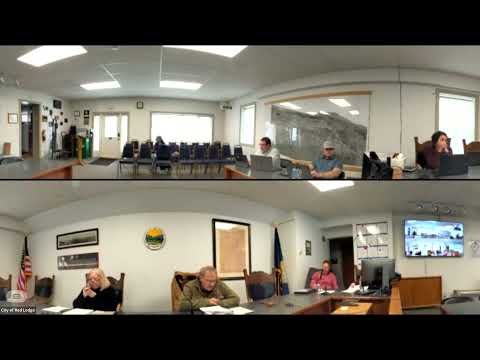
The Planning Board and Zoning Commission on April 22 continued a line-by-line review of proposed zoning changes that would reshape how planned unit developments (PUDs) and conditional-use permits are evaluated.
Jeremy, the planner, told the board he added a minimum-size threshold for PUDs: “PUD shall have a minimum area of 2 acres for residential or mixed use, and 1 acre where the applicant demonstrates that the PUD will result in superior design, preservation of historic or natural features, or redevelopment of infill property.” He said the intent is to reserve the PUD process for larger projects that require more flexibility than standard zoning allows.
The proposed package links any increase in allowable density to measurable public benefits. “Density may exceed underlying zoning only when the applicant provides public benefits as defined above,” Jeremy said, summarizing the draft: open-space preservation, affordable or workforce housing, enhanced pedestrian or trail connectivity, historic preservation, public amenities and advantageous site utilization.
Board members debated wording that would let planning staff and the board weigh subjective design claims. Multiple members warned against open-ended phrases such as “superior design”; several preferred language like “advantageous site utilization” or focusing on demonstrable outcomes such as preserved open space or deed-restricted affordable units. One member noted that applicants would identify which public-benefit category they were relying on and the board would assess the evidence.
The draft also adds a density-bonus framework tying the extent of any density increase to the level of public benefit provided, and a requirement that PUD applicants submit a site plan showing compliance with site-design standards. Jeremy proposed a default open-space target of 20% of gross site area, subject to board discretion.
On emergency access, the planner recommended that applicants coordinate with the local fire department and meet international fire-code standards rather than the code specifying a universal numeric threshold. “The applicant shall work with the fire department to provide adequate ingress and egress to the site, for provision of emergency services,” Jeremy said; board members largely supported leaving detailed thresholds to fire-department review.
The packet clarifies how PUD overlays interact with underlying zoning and with subdivision review. Using the Spires development as an example, Jeremy said zoning can remain in place even when a preliminary plat expires, but any future phases must re-enter subdivision review under state timelines.
Separately, Jeremy proposed strengthening the conditional-use permit (CUP) section by adding that the CUP process is discretionary and quasi-judicial and placing the burden of proof on the applicant. “The applicant bears the burden of demonstrating through competent and credible evidence that the proposed conditional use complies with all applicable standards,” he said. The change is intended to give the board clearer grounds to deny incomplete or noncompliant applications.
What happens next: the board signaled general agreement with many of the clarifications and asked staff to reflect preferred wording changes (for example, replacing or qualifying subjective design terms). The board will continue its line-by-line review at a future meeting; no final ordinances or vote on the revised text occurred at this session.
Ending: The planning staff will revise the draft language to remove or clarify subjective terms, refine the public-benefit list, and return the updated regulations for continued review at the next meeting.