Get Full Government Meeting Transcripts, Videos, & Alerts Forever!
Get email alerts on the Disability Employment topic
No spam. Unsubscribe anytime.
Rudolph Victor Kuzer IV shares decades of experience and a call to expand employment supports at Inclusion Works event
Summary
At a March 2026 Inclusion Works Lunch & Learn, author and advocate Rudolph Victor Kuzer IV described growing up with limited supports, recounted his path into teaching and advocacy, and urged North Carolina programs to listen to people with disabilities and build practical training-to-work modules.
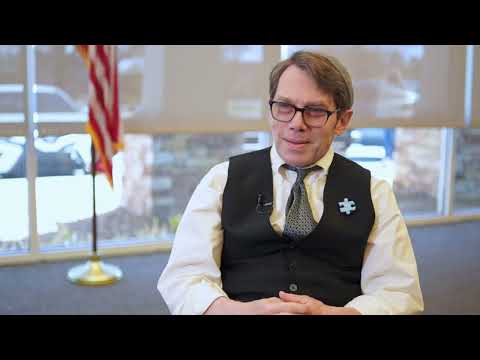
Rudolph Victor Kuzer IV, an author, educator and member of the North Carolina Developmental Disabilities Council, told attendees at the March 2026 Inclusion Works Lunch & Learn that listening to people with intellectual and developmental disabilities is essential to creating work pathways.
Claire Colligan, employment lead for intellectual and developmental disabilities at the Division of Mental Health, Developmental Disabilities and Substance Use Services in the North Carolina Department of Health and Human Services, opened the event and introduced Kuzer before an interview and video presentation.
Kuzer described a childhood marked by parental alcoholism, early occupational-therapy placements and finding nurturing among neighborhood peers. He said the combination of community supports and structured interventions helped him develop coping strategies and social skills that later aided his education and employment.
"I was born in Princeton, New Jersey in 1962," Kuzer said, and he recounted how early therapies and small-group school supports such as a "taking a break" activity helped manage his behavior and attention. He said creative outlets in high school—art, theater and track—gave him structure and a sense of belonging.
Kuzer described entering education as an adult after seeing gaps in classroom practice. He recalled an early teaching moment where he positioned himself as a learner with a pupil and used peer-led instruction to help a fellow student grasp material. "I made myself a student and he was my helper," Kuzer said of that classroom exchange.
He also spoke candidly about hardship and recovery. Kuzer said he once felt suicidal when supports were lacking but that involvement in theater, chorus and later sober living helped. "I am seven years sober," he said, describing ongoing strategies to manage panic disorder and stress.
Asked about North Carolina's Inclusion Works initiative, Kuzer called the effort "ambitious" and "fundamental" and urged program designers to develop practical modules that let individuals map local schooling and technical training into career options. "Listen," he told organizers and service providers, arguing that individualized, practical planning helps people convert training into paid work.
Kuzer offered direct advice to job-seekers and those who support them. "Don't sweat it," he said to young people entering the workforce. To supporters, he said: take time to understand each person's strengths and build "a smart and valued relationship" rather than assuming limits.
Marlene, Kuzer's spouse of 36 years, described their partnership and the daily, practical ways they support one another, saying Kuzer is "very intuitive" about her needs and that the couple has learned routines that help them manage stress and communication.
Colligan closed the session by thanking Kuzer for sharing his life and perspectives and by encouraging attendees to carry the session's practical suggestions—about listening, building modules and linking training to work—into their Inclusion Works efforts.
The interview highlighted lived experience, concrete examples of supports that worked for one advocate, and several program-level suggestions for North Carolina's work to expand employment for people with intellectual and developmental disabilities. The session ended with a related video and a note that Inclusion Works continues to develop training and partnership pathways.