Get Full Government Meeting Transcripts, Videos, & Alerts Forever!
Get email alerts on the School Safety topic
No spam. Unsubscribe anytime.
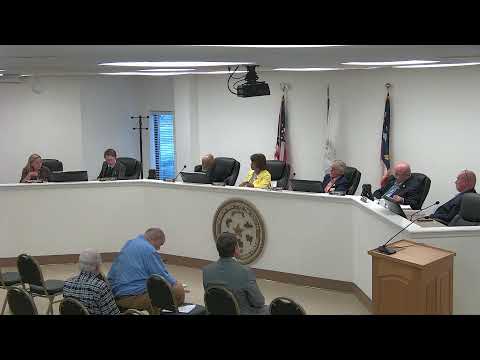
Roanoke Rapids council delays decision on sharing cost for school crossing guards after extended debate
Summary
City and school officials discussed staffing, liability and a school proposal to hire a third-party crossing-guard service at roughly $58,000 a year; council considered contributing about $28,000 but rescinded a motion and postponed final action until the school board meets.
The Roanoke Rapids City Council heard an extended presentation about gaps in morning and afternoon school crossing coverage and agreed to delay a final decision on whether to share the cost of a proposed third‑party crossing‑guard service.
City Manager and Police Chief explain problem and options. The city manager told council that the school district had asked the city to consider splitting the cost of a contractor to provide crossing‑guard services; the packet described an average cost “about $58,000 per year, or about $28,000 per agency,” the manager said. Police Chief Guyant described staffing shortages and frequent vacancies on off‑duty assignments, saying the department sometimes has only four officers available for multiple calls and cannot reliably cover three schools twice a day with regular patrol staff. “We cannot continue this pace throughout the entire school year,” Chief Guyant said, arguing the city needs a longer‑term plan.
School district outlines proposal and liability concerns. The school district’s representative, Miss Thompson, said the district values its decades‑long partnership with the police department but that paying a third party raised the district’s costs above what it currently pays for off‑duty officers ($45 per hour). She told council the district’s intent was to reduce the burden on police and to ensure students are safe at locations such as Belmont, where geography and traffic create particular risks. Thompson also warned that using in‑house staff such as custodians or teacher assistants for traffic duty carries liability and training concerns: “I do not feel comfortable with taking someone who has signed on to be a custodian or a teacher assistant and putting them in traffic,” she said.
Legal and fiscal context. City Attorney Davis explained that, from a legal standpoint, the general statutes do not obligate the city to fund school crossing guards and that the school system has responsibility for sidewalks and student transport policy; however, he said council may elect to help and outlined options for contracting or designating traffic control officers under state law. The finance director asked for clarity about how much the school district had already budgeted for off‑duty officers before the council committed city funds.
Council discussion and outcome. Several council members emphasized child safety and pressed for a near‑term solution. One council member proposed a motion to provide up to $28,026 toward crossing coverage for the remainder of the school year, contingent on the school district covering the other half. After debate about proration, contract language and the need for a memorandum of understanding, the maker of that motion rescinded it and the council voted to postpone final action until the school board meets and presents a final plan. Mayor Smith said staff (the city attorney, city manager, police chief and finance director) had clear direction to prioritize the issue and return to council after the school board meeting.
What happens next. Council directed staff to work with the school district and to draft any necessary memorandum of understanding and budget amendment if both parties agree to share costs. The council will revisit the issue at its next scheduled meeting after the school board’s consideration.