Get Full Government Meeting Transcripts, Videos, & Alerts Forever!
Get email alerts on the Public Art topic
No spam. Unsubscribe anytime.
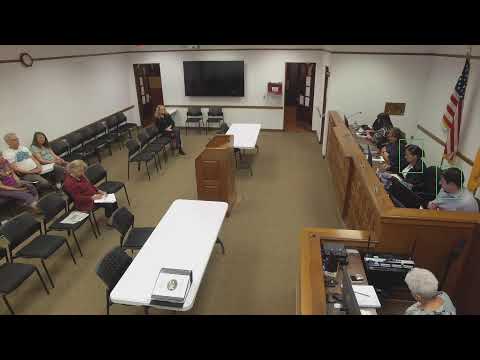
Mesilla trustees debate scope and appeals process for new public‑art ordinance, send draft to Planning & Zoning
Summary
Trustees discussed a proposed standalone ordinance to regulate murals, sculptures and public art including a recommended Public Arts Committee (PAC). Committee members supported it, but trustees raised concerns about language saying 'all decisions by PAC are final' and requested clearer appeal and oversight language; board requested redlines and a Planning & Zoning review.
The Mesilla Board of Trustees took up a draft ordinance to create a standalone public‑art code that would regulate murals, sculptures and other public installations.
Mayor/Chair (speaker 5) outlined the draft, which sets definitions, district‑specific guidelines (historic residential, historic commercial, residential, rural agricultural, general commercial), application and review timelines, maintenance and removal rules, enforcement penalties, and proposes creating a Public Arts Committee (PAC) to oversee application review. The draft specifies PAC membership — including a representative of the AMICIA board as chair, a Planning & Zoning Commission representative as vice chair, an artist or arts professional, a community member with interest in public art, and a business/nonprofit representative.
Two members of the ad hoc committee that developed the ordinance urged trustees to approve the draft. Catherine Walkenshi, who said she served on the ad hoc committee, called the ordinance "well thought out" and asked trustees to ensure the sign ordinance and public‑art ordinance cross‑reference how murals used as signage are handled. Mary Helen Rachy, also a committee member, said the ordinance reflects broad committee input and urged the board to move forward.
Trustees, however, raised substantive concerns. One trustee highlighted language in several zones that the draft reads "all decisions by PAC are final," calling that wording contradictory because the ordinance elsewhere allows appeals to the Board of Trustees. That trustee said: "They're not a governing board ... I don't think they just my personal opinion should have that much authority." Other trustees worried the language about existing installations was confusing — appearing to exempt prior work in some places yet subject it to review in others — and asked who would review "large installations visible from public road." The mayor and staff explained the intent: the PAC would conduct the initial review, Planning & Zoning would provide additional oversight for zone‑specific historic/color guidelines, and the Board of Trustees would remain the appellate body where an appeal is filed.
A trustee asked whether the PAC would have written guidelines beyond subjective judgment; another suggested that routine applications could be handled through the PAC and Planning & Zoning to avoid burdening the trustees with every routine approval. The board discussed balancing efficient review timelines against historic‑preservation and public‑interest oversight; staff noted that existing installations would generally be grandfathered and only changes to an installation would trigger review.
After extended discussion and requests for clearer wording around "final decisions" and the appeal path, the trustees directed staff to prepare redlines and to forward the draft to the Planning & Zoning Commission for additional review before returning the ordinance to the trustees for final consideration.