Get Full Government Meeting Transcripts, Videos, & Alerts Forever!
Get email alerts on the Ambulance Grant Procurement topic
No spam. Unsubscribe anytime.
Coffee County EMS warns state ambulance grant deadline likely unattainable amid production backlog
Summary
Board members said a state grant (described in the packet as $608,000) requires ambulance possession by next October but production backlogs and chassis shortages make meeting that deadline unlikely; the board discussed procurement workarounds and said a statewide association is asking the state to extend the deadline.
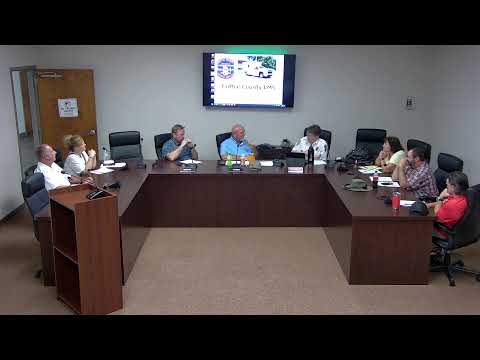
The Coffee County EMS Board on July 16 warned that a recently announced state grant to help rural counties buy ambulances appears infeasible under the grant's current terms.
S4, who summarized the grant, said the state sent "a grant for, $608,000 to rural counties for purchase of a new ambulance." Board members immediately raised concerns about timing: Chief Michael Bock said production queues and VIN/order timing make it unrealistic to order and receive a new ambulance before the grant's stated deadline.
Why it matters: If counties cannot take possession before the grant end date, they may be ineligible to receive the funds. That could leave rural services with no immediate path to replace aging ambulances even though many counties reportedly received award notices.
Board discussion and key points: Participants said the grant packet requires counties to have vehicles in their possession by the grant end date. "You can't order one now and get it by next October," Michael Bock said, noting long production lead times and dealers issuing VINs only after a vehicle moves farther into production. S4 and others also said large numbers of counties have been approved for funding, contributing to a production push: one speaker stated that "88 counties just got $300,000 to buy an ambulance," a figure the board raised alongside the $608,000 grant description; the meeting record contains both figures and the board flagged the discrepancy for clarification.
Board members explored procurement workarounds. They discussed remounting a used ambulance box onto a new chassis as a quicker option, but noted competitive-bid timeframes (15'3 days) and market demand can cause a vehicle to be sold before the county's bid process finishes. The board also discussed whether an order date or a purchase/receipt date counts for grant eligibility and said they would seek written clarification from the granting authority.
The board noted a separate supply issue: Chief Bock said Chevrolet has effectively stopped making a one-ton chassis compatible with many ambulance boxes, forcing buyers toward Ford chassis and reducing available supply. That, board members said, will lengthen delivery waits further.
What comes next: S1 and other directors said the Tennessee Ambulance Service Support Association (referred to in the meeting as TASSA) is pushing the state to extend the grant's possession deadline or to permit counties to reserve funds with a purchase order; the board said staff would pursue clarification from the state and the association.
The board did not take a final vote on any grant-related resolution during the meeting; members instructed staff to seek written guidance on whether an order date, a purchase date, or actual receipt triggers grant eligibility and to report back.