Get Full Government Meeting Transcripts, Videos, & Alerts Forever!
Get email alerts on the Budget topic
No spam. Unsubscribe anytime.
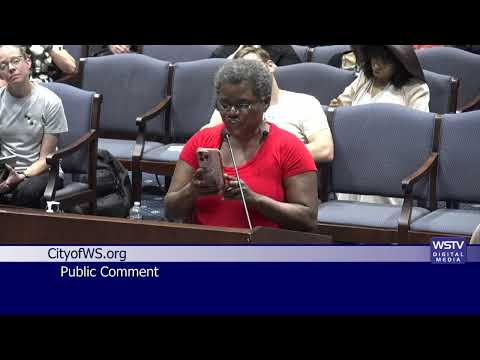
Hundreds testify as Winston Salem debates FY27 budget with 4.6% tax proposal
Summary
In a lengthy public hearing, dozens of nonprofit leaders, residents and advocates urged the City Council to prioritize funding for housing stability, childcare, violence prevention and arts programs as staff presented a proposed FY2026–27 budget with a recommended 4.6% property-tax increase and projected total budget just under $703 million.
City staff presented the proposed FY2026–27 budget May 18 and told the council the plan would maintain service levels, make strategic investments and address facility condition assessments while recommending a 4.6% property-tax rate increase that staff said would equal roughly $5.50 per month for the median valued home.
Budget director Scott Tash summarized the proposal, saying the total budget is "just under $703,000,000," with operating increases of just over 4% and several fee adjustments recommended by utility and stormwater funds. He noted significant unmet requests: departments sought more than $20 million in operating increases and more than $100 million in unfunded capital needs.
The statutory public hearing drew a broad cross-section of nonprofit leaders and advocates who urged the council to invest in community services. Jamie Rogers Southern of Bookmarks asked the council to consider funding equipment and assisted-listening devices to expand program access; Brooke DeYoung of The Dwelling detailed the need for evening meal programming and how the organization served nearly 40,000 meals last year; Terry Taylor of Old Salem Museums and Gardens described tourism and economic impacts and said the organization supports 117 employees.
Other speakers included representatives from Smart Start of Forsyth County, Rejuvenation Support Services, Kalydeum (Coliseum), IFB Solutions, Piedmont Environmental Alliance and many neighborhood-based service providers. Common requests included continued or increased city grant support, investments in housing stability funds, and resources for violence-prevention programs.
Several residents and advocates pressed council to shift some policing dollars toward housing and community-based violence prevention. "We must address housing as a public safety issue," Asante Benson Bailey said, urging the council to reallocate a portion of police funding to housing justice and create an office of violence prevention. Multiple speakers urged the council to adopt cite-and-release or lowest-law-enforcement-priority policies for simple marijuana possession; Olivia Doyle specifically asked that council members sponsor a local ordinance to require citation in lieu of arrest.
Speakers also raised workplace-safety concerns for seasonal city lifeguards after heat-related incidents last year and asked for heat-safety rules; parents and lifeguards described multiple instances of heat exhaustion and called for operational changes on extreme heat days.
Council members and staff noted a budget workshop scheduled for May 21 and budget adoption slated for June 1. Staff repeatedly told the room that various pots of funds (general fund, federal grants and hotel-tax allocations) are used for different kinds of community support and that the proposed property-tax increase is not intended to fund all unfunded departmental requests.
The public hearing and comment periods concluded after more than an hour of testimony; the council continued its budget process with upcoming workshops and a formal adoption vote expected at the June 1 meeting.