Get Full Government Meeting Transcripts, Videos, & Alerts Forever!
Get email alerts on the Open Space Amendments topic
No spam. Unsubscribe anytime.
Conservation commission urges front‑loading of open‑space reviews and new stewardship requirements
Summary
York planners and the Shore Conservation Commission debated redlined amendments to the town's Open Space Conservation Subdivision ordinance, including requiring proposed open‑space holders to participate early, provide draft stewardship agreements and funding commitments, and for applicants to request conservation feedback on all plan versions.
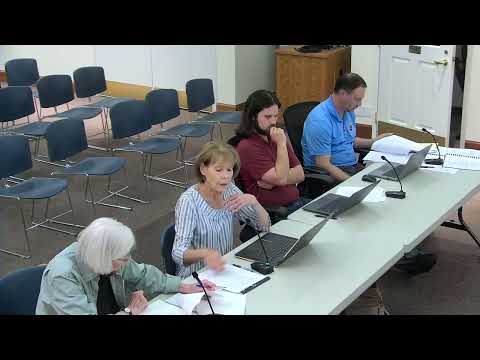
The Shore Conservation Commission presented redlined changes to York's Open Space Conservation Subdivision ordinance and urged the planning board to "front‑load" conservation review by making the proposed open‑space holder part of early submissions.
"The initial submission for open space design review must contain documentation on the agreement between the applicant and the proposed open space holder of the following items," the presenter from the conservation commission said, listing stewardship funding, monitoring and legal defense, boundary marking, and review of HOA documents. The presenter said making those expectations explicit would reduce late changes that undermine conservation outcomes.
Planning staff and board members agreed conservation input is valuable early in the process but debated how prescriptive the code should be. Some members warned that requiring full engineering or finalized agreements at conceptual review would add expense and slow projects. "I think one of the overriding goals here is to front‑load this into the process rather than back‑load it," a board member said, supporting earlier involvement but asking for pragmatic limits on required engineering.
The board discussed several specific changes proposed by the conservation commission: (1) requiring applicants to request conservation commission feedback on all plan versions, (2) making the proposed open‑space holder part of the initial presentation and submission, and (3) asking the holder to provide written documentation showing capacity to monitor and enforce conservation restrictions.
Members debated waiver language for the ordinance's opt‑out provision. The conservation commission recommended that if parts of the ordinance are to be waived, the developer must show that adjustments (for example to road placement, setbacks or buffers) would increase overall conservation value, and the open‑space holder should be party to that demonstration. Board members asked staff to tighten the waiver criteria so waivers would be clearly limited to dimensional standards rather than wholesale reductions in open‑space percentage.
The board also weighed requiring more details in the yield plan: whether to ask for building envelopes, workable home/septic/well locations and protective radiuses up front. Conservation advocates said those details make yield calculations more reliable. Planning staff warned that obligating costly on‑site engineering before conceptual approval could be burdensome and suggested a middle ground: require enough information to determine "reasonably achievable" yield while allowing technical work to follow preliminary approvals.
The commission and board agreed to further draft the ordinance language and return a revised packet for additional review; staff said the group will seek town counsel on deed‑disclosure language and the legal implications of requiring draft agreements or deed references. The planning board directed the conservation commission and staff to refine waiver and enforcement language and to return with a consolidated draft by the fall.