Get Full Government Meeting Transcripts, Videos, & Alerts Forever!
Get email alerts on the Public Safety topic
No spam. Unsubscribe anytime.
Kentucky signs annual interdiction plan, reports major seizures and expands NG9‑1‑1
Summary
Beshear signed the state's annual drug interdiction plan and praised multiagency seizures of fentanyl and meth; the National Guard and Kentucky State Police outlined the Counterdrug Program and Angel Initiative, and Amy Hess described a statewide transition to next‑generation 9‑1‑1 with full deployment targeted by 2027.
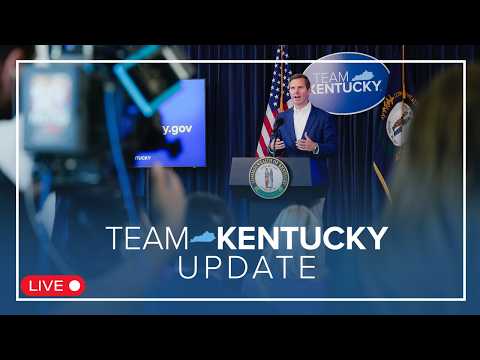
Governor Andy Beshear used Monday's Team Kentucky update to spotlight public‑safety work: he signed the state's annual drug interdiction plan, thanked the Kentucky National Guard and Kentucky State Police for large seizures of fentanyl and meth, and announced progress on a statewide transition to next‑generation 9‑1‑1.
Beshear cited four straight years of declines in overdose deaths and said that in the first quarter of the federal fiscal year teams seized more than 289 pounds of fentanyl, over 70,000 fentanyl pills, 2,377 pounds of meth, 1,333 pounds of cocaine, and more than 23 pounds of heroin. "That's incredible work," he said, and he invited members of the counterdrug team to discuss the plan.
Brig. Gen. Bruce Bancroft, assistant adjutant general for the Kentucky National Guard, described the Guard's Counterdrug Program—38 full‑time soldiers and airmen who support federal, state and local law enforcement with aviation, communications and investigative case analysis—and thanked the governor for ongoing support.
KSP Deputy Commissioner Chad White said the Kentucky State Police equip troopers with naloxone and run the Angel Initiative, which allows Kentuckians to voluntarily walk into any state police post to be connected with drug treatment; he said 294 Kentuckians have been helped through that program to date.
Amy Hess, executive director of the Kentucky Office of Homeland Security, outlined the NG9‑1‑1 transition—moving from analog systems to a secure digital infrastructure that allows text, better location routing and greater situational awareness—and said NG9‑1‑1 has been implemented in 19 call centers covering 22 counties and more than a half‑million residents. Full implementation across all counties is expected by the end of 2027, she said. Hess also reported that more than 60 law enforcement agencies will receive nearly $1.1 million to buy protective equipment, funded by auctions of confiscated firearms.
Officials described the drug interdiction plan as the operational blueprint to coordinate multiagency seizures and prevention work; the governor and public‑safety leaders said continued interagency cooperation is central to sustaining declines in overdoses.
The administration said operational and implementation details of NG9‑1‑1 and interdiction activities will be provided through agency releases as deployment and funding steps proceed.