Get Full Government Meeting Transcripts, Videos, & Alerts Forever!
Get email alerts on the Permanent Supportive Housing topic
No spam. Unsubscribe anytime.
State webinar details permanent supportive housing, tenant protections and voucher options for people with disabilities
Summary
North Carolina DHHS presenters outlined permanent supportive housing (PSH) as a long-term, evidence-based model combining affordable housing and voluntary support services, reviewed HUD voucher types and tenant protections, and described the LME‑MCO role in regional housing planning.
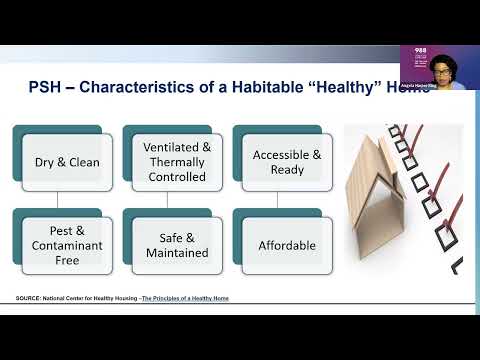
Angela Harper King, mental health housing liaison to LME‑MCOs at the North Carolina Department of Health and Human Services (DHHS), said permanent supportive housing (PSH) combines deeply affordable housing with individualized, voluntary support services to help people with disabilities achieve stable community-based living. "Permanent supportive housing is an evidence-based practice housing model that's recognized for meeting the housing needs of individuals with disabilities," she said.
PSH, Angela said, must be habitable, safe, accessible and affordable; HUD affordability guidance generally expects households to spend no more than 30% of income on rent and utilities, and paying more than 50% creates a "severe cost burden." She stressed that housing and services should be separate: tenants hold standard leases and retain the right to choose or to stop services without losing their housing. "It's housing that's not time limited," she said, adding that supports must be flexible and voluntary.
The presentation summarized federal programs commonly paired with PSH: Section 811 project‑based rental assistance, mainstream (special‑purpose) housing choice vouchers for nonelderly people with disabilities, and nonelderly disabled (NED) vouchers that require the head of household to have a disability. Angela noted mainstream vouchers have broader eligibility and higher utilization than NED vouchers, which are more restricted.
Angela also reviewed tenant protections under the Fair Housing Act and related law: landlords, sellers and homeowner associations must consider reasonable modification and accommodation requests to ensure equal opportunity for people with disabilities. She recommended documenting accommodation requests in writing when possible and explained that tenants—not landlords—often carry responsibility for modifications when no federal subsidy applies.
Putting PSH into practice requires local capacity, Angela said. LME‑MCO housing teams are expected to develop annual regional housing plans aligned with the state's strategic housing plan. She cited the state goal to add 3,400 permanent supportive housing units over five years and reported 755 created in the plan’s first year. LME‑MCOs also handle landlord recruitment and retention, outreach to local stakeholders and education for internal staff and contracted providers.
The session concluded with links to HUD and state dashboards, and presenters directed attendees to posted slides and a recording for additional details.
The presenters said the webinar materials and dashboard links will be posted on the DHHS DMH webinars page and attendees were invited to submit further questions by email.