Get Full Government Meeting Transcripts, Videos, & Alerts Forever!
Get email alerts on the Traffic Safety topic
No spam. Unsubscribe anytime.
Sewall's Point schedules town workshop on speeding after residents urge lower limits and traffic calming
Summary
Commissioners agreed to hold a public workshop (town‑hall style) to discuss speeding and traffic‑calming on North and South Sewall's Point Road; residents asked the town to consider lowering speed limits and adding calming measures and enforcement.
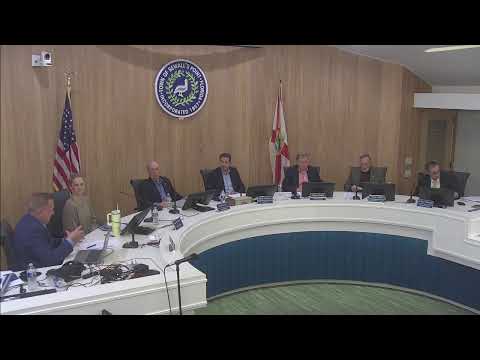
The Sewall's Point Town Commission directed staff Jan. 14 to schedule a public workshop to address speeding on North and South Sewall's Point Road after multiple residents said high speeds threaten pedestrian and neighborhood safety.
Commissioner Titticus requested the workshop so residents could "throw their ideas out" on lowering the speed limit and traffic‑calming measures; commissioners discussed formats including a Zoom or in‑person town‑hall and possible Saturday timing to maximize attendance. The town manager and staff said they would publicize the session and attempt a 10:00 a.m. Saturday meeting date, with the option of a weekday evening. Town staff confirmed that a majority of commissioners must be physically present for the meeting to be properly noticed.
Public commenters described repeat speeding, concerns for children and pets, and said 35 mph feels too high in the residential area. Jason Bolton told the commission he would like to formally propose lowering the speed limit and suggested reducing it to 25 mph in residential stretches; Crystal Toderman and Diane Kimes urged lower limits and noted the community character and walkability impacts. The town manager said the police and staff had completed speed studies on the north and south segments and that those studies would be published and made available to the public.
Commissioners discussed practical options: a focused workshop, possible Saturday scheduling, starting an hour earlier with a dedicated pre‑meeting workshop, and a phased, public approach to gather resident input. Staff was directed to coordinate dates and to post the chief's speed studies and other materials online before the workshop.
Next steps: staff to publish the studies and schedule the workshop with adequate notice; the commission indicated openness to both virtual participation and an in‑person town‑hall format and asked staff to ensure proper notice rules are followed.