Get Full Government Meeting Transcripts, Videos, & Alerts Forever!
Get email alerts on the Zoning Accessory Structures topic
No spam. Unsubscribe anytime.
Sewell's Point pauses accessory-structure permits and asks staff to tighten ordinance language
Summary
The Sewell's Point commission approved a 60-day moratorium on new accessory-structure permits and advanced first reading changes to an appearance ordinance, asking staff to remove a prescriptive sentence and refine vague language before second reading.
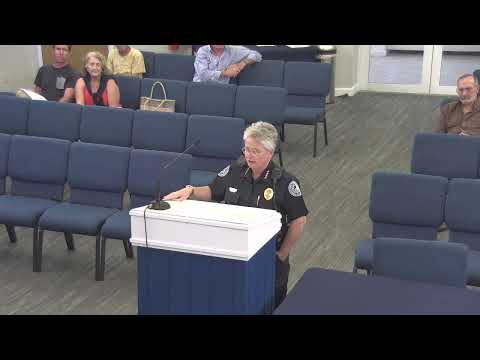
The Sewell's Point Town Commission on Aug. 13 approved a 60-day moratorium on accepting or processing new building-permit applications for accessory structures, and moved to revise proposed appearance standards in Ordinance No. 465.
The moratorium, enacted by Resolution No. 974, declares “zoning in progress” while staff rewrites sections of the accessory-structure rules. Vice Mayor Fender moved for the 60-day pause; the commission approved the motion by roll call.
During first reading of Ordinance 465, commissioners and staff focused on enforceability and ambiguous wording. Commissioners questioned a provision that would require accessory structures on through lots to “complement the surrounding character” and a clause that mandated “articulated panels” for garage doors. Commissioner Mayfield said the wording is “a bit vague” and warned that the provision could be difficult to enforce. Staff said the language was derived from other communities’ codes and that enforcement would be subjective in some cases.
Vice Mayor Fender moved to approve the ordinance at first reading with one specific edit: remove the final sentence of item d that mandates articulated panels for garage doors and direct staff to work with Glenn and Jack to reword item c. The motion passed and the commission instructed staff to return with tightened language at second reading.
The moratorium and the requested rewrite aim to give the town time to harmonize permit processing with clearer standards and avoid approving permits that later conflict with any new appearance rules. The clerk recorded the vote on the moratorium and the ordinance motion on the public record; the ordinance will return for a revised first reading and final action at a later meeting.