Get Full Government Meeting Transcripts, Videos, & Alerts Forever!
Get email alerts on the Behavioral Health topic
No spam. Unsubscribe anytime.
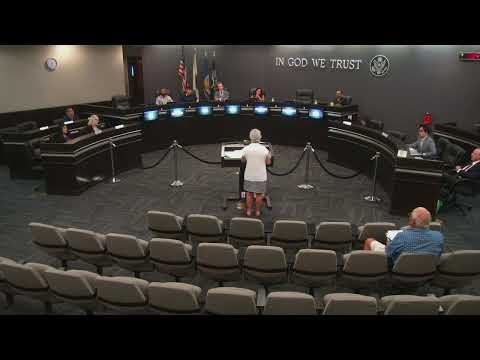
Neighbors press safety and compatibility concerns as Lancaster planning commission continues CUP for recovery center expansion
Summary
The commission continued, by a 4‑1 vote, a conditional use permit for Resilient Recovery Treatment Center’s request to expand from six to 12 beds at 43900 Clark Court, directing staff to facilitate negotiations between the applicant and neighbors on additional enforceable conditions.
The Lancaster Planning Commission on July 20 voted 4‑1 (with one absence) to continue deliberation on Conditional Use Permit 26‑008 for Resilient Recovery Treatment Center so staff can work with the applicant and neighborhood representatives to draft additional, enforceable conditions before the commission acts again.
Resilient Recovery’s founder and CEO, Vadim Lehi, told the commission the center has operated at 43900 Clark Court since February 2023 and is licensed by the California Department of Health Care Services and accredited by the Joint Commission. "Every additional bed represents another opportunity for someone to rebuild their life," Lehi said, urging approval to use existing structures to increase licensed capacity from six to 12 beds without new construction.
Staff associate planner Mitzi Alvarado explained that in the R‑7,000 zone any facility providing care for more than six residents is considered a health facility under the Lancaster Municipal Code and therefore requires a conditional use permit. The application proposes adding six beds in the existing ADU, raising maximum overnight capacity to 12 and maintaining a 24‑hour, staggered staffing model the applicant described as roughly 12 employees across shifts.
Neighbors opposing the expansion described multiple incidents they said were linked to the facility: Patricia Garcia, who lives directly behind the house, said sheriff’s deputies and U.S. Marshals once came to the property to serve a warrant and that she had recorded clients entering her backyard. "I don't even want to, to consider, like, 12," Garcia told the commission, citing smoking, cigarette butts in her yard and privacy loss. Other residents reported emergency responses, increased traffic and parking problems on the 12‑home cul‑de‑sac and a large metal canopy that blew into a neighbor’s backyard during a windstorm.
Supporters — including former clients, nurses and referral partners — described successful outcomes and clinical protocols. Nurse practitioner Jack Juan said clinical screening and continuous monitoring keep patients safe, adding, "in my professional opinion, increasing resilience capacity from 6 beds to 12 beds does not change the quality or safety of the medical care we provide." Alumni and staff said the expansion would increase access to treatment in Lancaster.
Commissioners pressed the applicant on operational details: current staffing ratios, whether those ratios would change after expansion, frequency and causes of calls for service, and safeguards against overdoses and intake of individuals with active criminal warrants. The applicant said staff perform screenings, monitor clients every 15 to 30 minutes, maintain camera surveillance and revise protocols in response to incidents; he acknowledged at least one overdose incident since opening and said the facility calls emergency services when needed.
City counsel and staff told the commission there is no local 300‑foot spacing requirement for the use; compliance and enforcement would rely on conditions of approval, state licensing requirements, fire and building inspections, and the city’s ability to revoke a CUP if it creates a public nuisance. Counsel also outlined the procedural options: approve as proposed, approve with added conditions, or preliminarily deny with staff assistance in drafting negative findings for a denial resolution.
Given the depth of neighborhood concern and the potential to craft enforceable conditions, one commissioner proposed a phased or limited approach (for example allowing fewer occupants in the ADU at first) and asked staff to facilitate meetings between the applicant and neighbors. The commission voted to continue the item to the next meeting to allow staff to return with proposed additional conditions and a potential resolution either approving or denying the CUP. The motion carried 4 yes, 1 no, 1 absent.
The CUP hearing record includes a staff packet, 10 letters from eight households in the vicinity, and multiple public‑comment testimonies. The commission closed the public hearing and preserved the record; staff will return with recommended, enforceable conditions and draft resolution language at the next scheduled Planning Commission meeting.