Get Full Government Meeting Transcripts, Videos, & Alerts Forever!
Get email alerts on the Transportation topic
No spam. Unsubscribe anytime.
Commission approves Cheatham Phase 3 road resiliency contract amid debate over traffic‑calming additions
Summary
After extensive discussion about right‑of‑way limits, grant constraints and design tradeoffs, the Sewell's Point commission approved the JW Cheatham contract for the Phase 3 road resiliency project; some members pressed to include traffic‑calming features within the $10.25M grant budget while others emphasized avoiding delays.
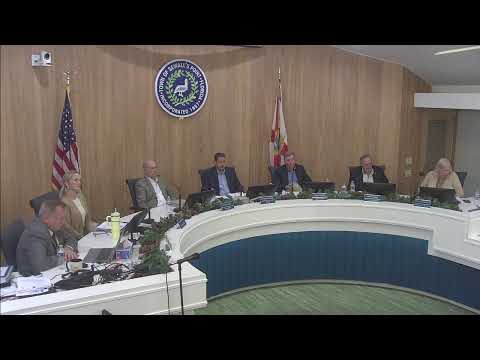
The Sewell's Point Town Commission voted Dec. 10 to approve the JW Cheatham contract for the Phase 3 road resiliency project after prolonged discussion about whether to add traffic‑calming features similar to those installed in nearby Ocean Breeze.
Joe Capra (speaker 8), the project engineer, described design constraints driven by limited right‑of‑way widths (some sections as narrow as 30 feet) and the need to protect tree canopy while installing stormwater and roadway improvements. He said traffic‑calming medians and raised sections can be installed where right‑of‑way permits, but medians increase the need for property acquisition and additional drainage adjustments. "The wider you make the median, the more right of way you're gonna need," Capra said, describing tradeoffs between calming, landscaping and drainage.
Commissioner Titticus (speaker 10) pressed staff to identify whether $250,000 in available bid contingency could be allocated to traffic calming within the grant total; several commissioners urged finding lower‑cost calming features (shrubs or speed tables) that would not delay construction. Legal counsel reminded commissioners that modifying a competitively bid scope after award can be complex if items were not included in the original bid; staff noted only one bidder responded to the solicitation, which eased some change‑of‑scope concerns.
The commission debated timing: Phase 3 construction is scheduled to start in early January and the grant requires prompt use of funds. Some commissioners voiced concern that adding scope now could delay the work and risk grant penalties, while others argued it was a missed opportunity to address resident speeding complaints.
After amendments and assurances that final contract language would be subject to legal review, the commission approved the Cheatham contract and instructed staff to pursue feasible traffic‑calming elements that do not jeopardize the grant or project schedule.
What happens next: Staff will finalize contract language with legal counsel, seek reasonable traffic‑calming design options tied to existing bid unit prices where possible, and begin preconstruction notifications; contractors are expected to mobilize in January.