Get Full Government Meeting Transcripts, Videos, & Alerts Forever!
Get email alerts on the Attendance topic
No spam. Unsubscribe anytime.
Pojoaque Valley board hears alarm on chronic absenteeism, asks for interventions
Summary
Superintendent Dr. Saburant told the board that 18.7% of students are chronically absent districtwide, with rates as high as 41.4% at one campus; the board pressed for data-driven interventions, better attendance tracking and resources to stem potential disenrollments.
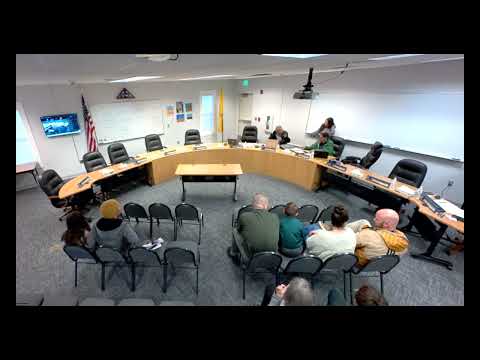
President Cusack called the meeting to order and the board heard a detailed attendance report from Superintendent Dr. Chanel Saburant.
Dr. Saburant told board members the district defines chronic absenteeism as missing 10% or more of school days and said districtwide 73 students — about 18.7% — already meet that threshold. Several campuses showed much higher rates: Pojoaque Valley Intermediate School around 41.4%, the 6th Grade Academy roughly 24.4%, Pojoaque Valley Middle School about 36%, and the high school about 38.36%. “When we look at semester 1, we have 5 individuals who have missed 10 or more percent” of staff days and similar concerns for students, she said.
Why it matters: board members and administrators said these attendance levels put students at academic risk and may presage later disenrollment if families disengage from school. Board member Benavides asked whether the district is tracking which interventions work and urged systematic data collection; Dr. Saburant said each school has an attendance improvement plan and the district uses an automated notification system to alert families when students are marked absent. She also said teacher reporting of daily attendance must improve so the district has accurate data to act on.
Board discussion focused on resources and next steps. President Cusack said she was “a little blown away” by the high campus percentages and urged the superintendent to identify concrete resource needs. Member Velasquez and others recounted home visits and wraparound supports that have helped retain families, and Member Mueller asked whether funds or staffing could be reallocated to support casework for chronically absent students.
Dr. Saburant and the board agreed to track interventions and to report back with evidence of what is and is not working after a full school-year cycle. She emphasized the district’s goal of building a culture of belonging to encourage regular attendance and noted that some of the causes — like options for online schooling and pandemic-era shifts in family choices — are regional trends rather than unique to the district.
Next steps: the board asked administration to return with a clearer plan for interventions, staffing needs to support attendance work and a timeline to report progress.