Get Full Government Meeting Transcripts, Videos, & Alerts Forever!
Get email alerts on the Billboard Signage topic
No spam. Unsubscribe anytime.
Board hears proposal to convert south-facing billboard to digital face and raise sign height; members pressed DOT compliance and sight-line limits
Summary
Applicant proposed converting the south-facing face of an existing on-property billboard to a digital display with an 8-second hold time, limited to a roughly 30-degree visibility cone; the proposal also includes raising the structure near 43.99 feet. Board members raised state permit, spacing and potential municipal/emergency message access issues. No vote is recorded in the provided transcript.
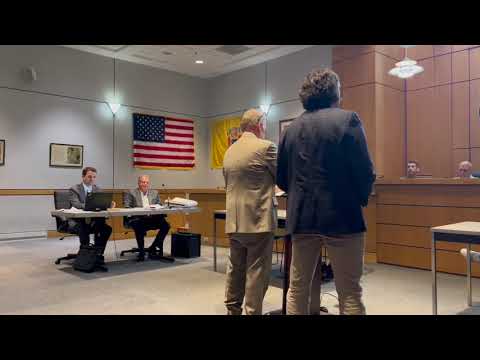
The planning board received a presentation on converting an on-property roadside billboard so that the south-facing panel becomes a digital/multimedia face while the north side remains static. The applicant presented a sight-line exhibit dated 06/30/2026 and described a 30-degree cone intended to limit the display's visibility toward nearby residences.
A vendor witness described the technology and said the proposed configuration narrows the cone of visibility to about 30 degrees and that the display would be configured with an 8-second hold time. "Do you what is the regulation for 8 seconds... 8 seconds," the vendor said to affirm the hold time setting. (Vendor/Presenter)
The applicant said the billboard would be raised compared with the existing structure (applicant cited a proposed 43.99-foot top versus an existing 35.5 feet) and that sight-line analyses examined a worst-case 1,000-foot radius to identify potentially affected residences. The presentation distinguished impacts to residential windows on the south side of the Turnpike from commercial properties in the opposite direction.
Board members asked about state permitting and spacing rules. One member cited a New Jersey administrative code limitation (asked about "NJAC 19 4 8 1 4" in the transcript) and the board discussed whether the proposed height and digital conversion would comply with DOT requirements and state distance limitations for digital billboards. The chair noted the overlay zone had previously acknowledged the existing billboard as a permitted use, but other properties would face different review standards.
Members also asked operational questions: whether the sign would default to a black screen on failure (the vendor said it would go dark), whether the municipality could obtain emergency-override access and how frequently messages would change (vendor: 8-second hold time, instantaneous change, no transitions). The applicant said it would ask the billboard owner/operator about municipal or emergency-message access and report back.
Concerns about glare and the psychological effect of a tall, 25–30-foot wall near parallel parking also arose in the discussion; board members asked whether the raised sign would set a precedent for similar heights on neighboring billboard structures and whether distance limitations would allow additional digital billboards nearby. The transcript ends before a final decision; the board requested that required state and DOT permits, acoustical/lighting analyses and complete exhibit sets be provided for the record.