Get Full Government Meeting Transcripts, Videos, & Alerts Forever!
Get email alerts on the Budget topic
No spam. Unsubscribe anytime.
Jackson County presents balanced FY 2627 budget draft, warns of multi‑million shortfall in later years
Summary
County staff presented a balanced FY 2627 budget totaling $108.5 million ( $81.8 million excluding grants) and outlined $500,000 in contingency, while warning of a projected $3.7M–$5.2M revenue shortfall in 2728–2829 depending on state and property appraiser estimates; options discussed include assessments, property sales and personnel changes.
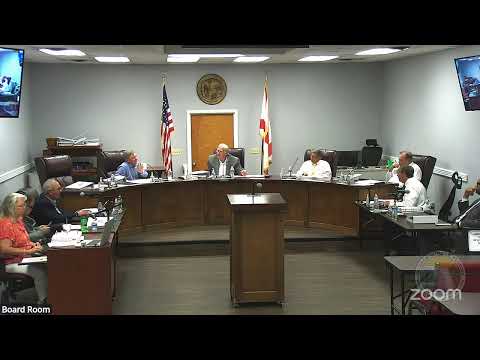
Jackson County staff told commissioners at a July workshop that the draft FY 2627 budget is balanced but that the county faces larger revenue risks in 2728 and 2829 if a proposed homestead exemption change is enacted.
"We have a balance budget that we're presenting today," the presenter told the board, adding that contingency for the coming fiscal year is projected at about $500,000. Staff said the total budget is $108,500,000 including grants, and $81,800,000 excluding grants for the year beginning Oct. 1.
The presenter summarized conflicting projections for lost ad valorem revenue if a $150,000 homestead exemption is adopted: the state revenue estimating committee estimated a $2.7 million loss in the first year and $3.7 million across two years, while the county property appraiser estimated about $4.0 million for the first year and $5.2 million over two years. County staff said they are using conservative revenue and expense forecasts to preserve reserves.
The draft includes recurring obligations such as a $1,511,776 annual bond payment and combined annual water loan payments of $209,911; staff also budgeted a 3% increase in property and casualty insurance (including workers' comp) and limited the health insurance cost increase to $22,800 based on prior board direction.
To meet an upcoming statutory $15 minimum wage final phase, staff proposed increasing pay ranges by $1,650 for all employees, which the presenter said would cost about $424,335 in the coming year.
Because capital requests from departments totaled roughly $9.0 million, the presenter said the county would prioritize essential outlay items and fund purchases from carryover only if available; staff estimated a conservative carryover number near $1,000,000 but said the final figure will be clearer as the fiscal year closes.
Commissioners and staff discussed options to close longer‑term shortfalls, including placing an EMS/fire assessment on property tax bills (statutorily required to be used for EMS/fire operations but which could free other general fund dollars), mandatory solid‑waste collection assessed on the tax roll (estimated to generate over $250,000), selling nonessential properties, freezing vacant positions, offering retirement incentives and, as a last resort, reductions in force.
The presenter also raised an equipment financing decision: 10 leased motor graders come off lease in February; buying all 10 could add roughly $900,000–$1,000,000 in annual debt service, while purchasing five would be about $500,000 per year.
Staff offered to meet individually with commissioners for more detail and named Lindsay (on Zoom) as available to answer line‑item questions.
The workshop was informational; no formal board action was taken. Staff said it will prepare requested follow‑up information — including examples of solid‑waste assessment ordinances, a prioritized capital list, and refined carryover estimates — for future consideration.