Get Full Government Meeting Transcripts, Videos, & Alerts Forever!
Get email alerts on the Rezoning Cf Smith topic
No spam. Unsubscribe anytime.
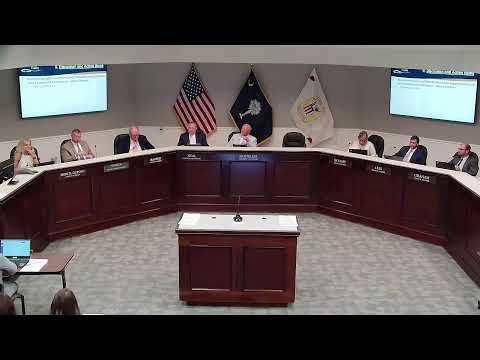
Council advances second reading of 71-acre CF Smith rezoning amid questions over MOU enforceability
Summary
Lancaster County Council advanced the second reading of a rezoning that would allow a CF Smith commercial development on 71.1 acres, after extended debate about road relocations, traffic mitigation and whether the developer’s memorandum of understanding (MOU) provides enforceable protections for neighbors.
Lancaster County Council advanced second reading of ordinance 20 26 20 12 on the CF Smith proposal to rezone approximately 71.1 acres at Charlotte Highway and Laurel Hill Road from low-density residential to regional business, despite questions from several council members about how commitments in a developer memorandum of understanding would be enforced.
John Johnson, representing CF Smith, told the council the project cannot be built without relocating Laurel Hill Road and said the developer and adjacent landowners have agreed on conceptual connectivity and a full-movement signal at Halifax. "This project is a very beneficial project to the community," Johnson said, and described buffer commitments and planned open space.
Several council members pressed the developer on whether the county could legally require a signed MOU as a condition of rezoning and whether promises would bind a future owner. One council member said, "We cannot require it," while the applicant’s attorney described the MOU as a mutual agreement and said the developer planned to tender a signed MOU before third reading. A developer representative added that, from a practical standpoint, the county’s leverage is that the project cannot develop without the road relocation that the MOU contemplates.
Speakers at the public hearing urged both approval and caution: neighbors raised concerns that regional business zoning could allow high-density residential development if the commercial center failed, and others asked that traffic signals, service-road connections, and buffer details be included in the MOU or otherwise secured.
The council voted to advance the ordinance on second reading with four votes in favor, two opposed and one member not answering the roll call. Council members said they expect the parties and county staff to continue negotiating the MOU and the road-relocation details before third reading.
Next steps: the council advanced the measure on second reading and indicated staff and the applicant will continue to work on the MOU and connectivity exhibits before the project returns for third reading.