Get Full Government Meeting Transcripts, Videos, & Alerts Forever!
Get email alerts on the Public Safety Funding topic
No spam. Unsubscribe anytime.
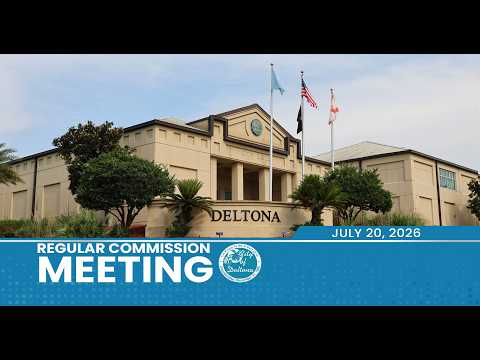
Deltona commission denies proposed fire assessment after hours of public opposition
Summary
After more than two hours of public comment, the Deltona City Commission voted 7–0 on July 20 to deny Ordinance 14-2026, which would have established a fire services special assessment; residents repeatedly said the fee would unduly burden longtime and fixed‑income homeowners.
The Deltona City Commission voted 7–0 on July 20 to deny Ordinance 14-2026, a proposed special assessment intended to fund expanded fire‑rescue capital and personnel needs. Commissioner Harriot moved to deny the ordinance, and Commissioner Santiago seconded; the motion carried unanimously.
The proposal, outlined in an ordinance read into the record by the city attorney, would have added a fire-rescue special assessment to the city code. Commissioner Harriot, who introduced the motion to deny, said he had spoken with dozens of residents who expressed confusion and concern about the proposed funding mechanism and its distribution across neighborhoods.
During an extended public‑comment period, dozens of Deltona residents urged the commission to reject or pause the assessment. Brandy White, a Deltona resident, asked why the city was setting an advertised maximum when residents had previously discussed pausing any assessment this year. Ron Bennett, a resident of Lake Breezeway, said he could not reconcile the proposed $579‑per‑household figure with the department’s budget and called for more transparency: “I multiplied that out ... and it came out to be ... $20,000,000,” he said, questioning the gap with the stated fire department budget.
David Sosa, a longtime local conservation and civic participant, called the charge “a new tax” and argued it shifted the burden to older, lower‑value homeowners rather than commercial properties, and asked whether the city had applied for recently announced state grants. Emily Helmberger, who identified herself as a District 6 resident, said she supports public safety but opposed asking residents to shoulder another recurring cost without a clear, long‑range plan and accounting of alternatives.
City staff had presented the ordinance as a means to secure dedicated revenue for fire‑rescue capital needs; legal staff and the city manager answered procedural questions during the hearing. After public testimony ended and commissioners discussed, the clerk conducted a verbal roll‑call vote; each commissioner recorded “Yes to deny.” The Mayor confirmed the motion passed 7–0, and the related action was removed from the agenda.
What happens next: With the ordinance denied, the commission took no further action to create the assessment at the meeting. Commissioners and members of the public asked staff to provide additional financial detail and alternatives for financing fire services in future meetings.