Get Full Government Meeting Transcripts, Videos, & Alerts Forever!
Get email alerts on the Budget And Taxable Value topic
No spam. Unsubscribe anytime.
Bozeman trustees adopt 2024–25 budgets while urging Department of Revenue to fix taxable-value errors
Summary
Trustees approved high school and elementary spending authority and tax-dollar levies but stopped short of setting mills while the Department of Revenue works with local jurisdictions to correct undercounted taxable value that could change tax bills. The board heard staff analysis showing an elementary shortfall, the role of protested assessments and options for correcting the error.
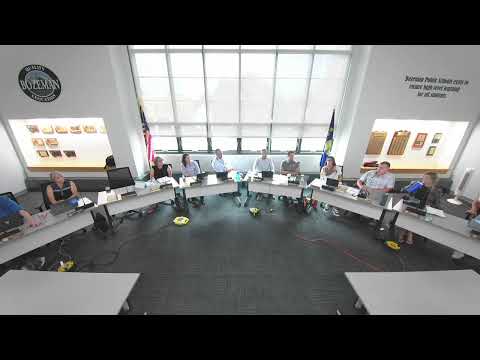
Trustees on Aug. 19 adopted the Bozeman School District’s spending authority for the 2024–25 fiscal year while asking the Department of Revenue and county officials to correct errors in taxable-value calculations that could change local tax rates.
Lacey (speaker 8), the district’s budget presenter, told the board the district is proposing a $122 million total spending authority for the year and asked trustees to approve tax levy dollar amounts but not set mills while the Department of Revenue works to recertify taxable values. She said local property taxes account for about 46% of the district’s revenue ($56 million) and noted a $1.1 million proposed increase in the general fund tied to a statutorily allowed 3% inflation adjustment.
“We received a letter from the Department of Revenue acknowledging errors in Gallatin County’s taxable values,” Lacey said, summarizing the DOR’s finding that condominium reallocations and an economic‑condition factor were misapplied during the 2023 reappraisal. Lacey told trustees DOR notified local jurisdictions on Aug. 16 and scheduled a meeting with taxing jurisdictions in Belgrade to work through fixes.
Board members heard that tax collections for the district came in at 97.92% last year—below the usual 99–100%—which translated to an approximate $1,150,000 shortfall. Lacey described scenarios using a 10‑year average of newly taxable property (about 4%) to estimate what values might have been absent the DOR error; under that scenario the district would have seen modest positive growth rather than the anomalous decreases reported.
Finance staff and trustees discussed statutory deadlines: county commissioners are required to “fix and levy” taxable values by Sept. 5, property bills are typically mailed in October, and installments are due following mailings (first half by Nov. 30, second half in May). Given the uncertainty, the superintendent’s office recommended approving spending authority in dollars and deferring any action to set mills until certified values are corrected.
Trustee (speaker 11) moved to approve the superintendent’s recommendation for the high‑school budget and associated tax‑levy dollar amounts; after no public comment the motion passed, recorded as 7 to 0. Trustee (speaker 9) then moved to adopt the elementary budget as presented; that motion also passed, recorded as 7 to 0.
The board also discussed options for communicating with taxpayers. Superintendent Casey Bertram (speaker 13) said the district and other local taxing jurisdictions had drafted a shared press release and would publicly inform property owners that the presented taxable values were incorrect and that work was underway to remedy the problem.
What happens next: the Department of Revenue, county officials and local taxing jurisdictions plan to meet to recalculate values. The district approved dollar amounts tonight to ensure it has spending authority; trustees explicitly avoided setting mills while DOR’s corrections are pending.