Get Full Government Meeting Transcripts, Videos, & Alerts Forever!
Get email alerts on the Haiti Security Elections topic
No spam. Unsubscribe anytime.
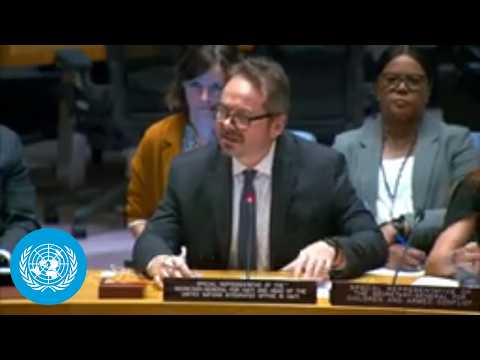
Presenter urges swift GSF deployment and a credible electoral calendar to stabilize Haiti
Summary
A speaker to the United Nations Security Council warned that gang violence, displacement and institutional challenges threaten Haiti's political transition and urged rapid deployment of the Gangs Stabilization Force (GSF), coordinated UN support and adoption of a realistic electoral calendar.
A presenter addressing the United Nations Security Council warned that Haiti faces persistent insecurity, acute humanitarian needs and institutional weaknesses that threaten the country’s political transition and called for urgent international support.
“The adoption of the revised electoral decree and the consensus reached on an electoral budget earlier this month are significant achievements,” the Presenter said, welcoming the launch of border registration and urging that “the next priority is clear, the adoption of a credible and realistic electoral calendar.”
The speaker said security and electoral preparations must advance together. “Security is indispensable for credible elections,” the Presenter said, adding that security concerns should not be used to delay the political process.
On operations, the Presenter described the launch of the Gangs Stabilization Force (GSF) as an “important milestone” and said full deployment of the GSF, together with support for the Haitian National Police and the armed forces, must be accelerated. The Presenter said the United Nations is committed to accompanying Haitian-led efforts and that the GSF should operate with logistical support from the UN support office in Haiti.
The remarks stressed adherence to human-rights standards: “Ensuring the full compliance of these operations with international human rights law and relevant international standards is also essential to sustaining legitimacy, strengthening public trust, and achieving lasting security gains,” the Presenter said.
The address highlighted the human toll of gang violence: “Millions of Haitians remain displaced or food insecure, while women and children continue to bear the brunt of the violence,” the Presenter said, and warned that children are particularly at risk, asserting that “as many as 1 in every 2 gang members today is a child.” The Presenter urged that preventing a lost generation be central to stabilization and recovery plans.
The Presenter praised coordination among partners — naming ONSO, contributing member states, the UN Integrated Office in Haiti (BINU), the GSF and Haitian institutions — and welcomed the leadership of the National Commission on Disarmament, Dismantlement, and Reintegration. The speaker said the commission’s Haitian‑owned vision should be translated into a comprehensive national program supported by international partners.
Referencing a communication from the Secretary‑General to the Council, the Presenter said the United Nations has developed practical options to support programs that strengthen justice, accountability and oversight, and noted the establishment of two specialized judicial units to bolster accountability for serious crimes.
To convert security gains into lasting stability, the Presenter urged member states to channel assistance through the proposed multi‑party trust fund and to coordinate complementary avenues of support.
The address closed with a call for urgency and sustained international engagement: the Presenter told the Council the current window of opportunity must be seized and that continued UN logistical and political support will be critical to deliver tangible improvements for the Haitian population.