Get Full Government Meeting Transcripts, Videos, & Alerts Forever!
Get email alerts on the Quiet Zone topic
No spam. Unsubscribe anytime.
Caldwell says train horns should be silenced mid‑August as quiet‑zone construction wraps up
Summary
Deputy Public Works Director Bruce Mills told the council the quiet‑zone project is essentially complete, the city expects Union Pacific review within 21 days after an FRA notice and horns to stop around mid‑August; total project cost now estimated at about $260,000.
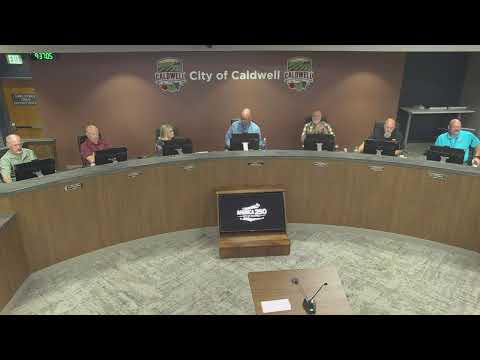
Deputy Public Works Director Bruce Mills told the City Council on July 20 that construction of Caldwell’s downtown quiet zone is nearly finished and the city expects train horn noise to stop in mid‑August.
Mills said medians, barriers and access‑control changes are in place and the only remaining construction item is installing delineators atop some medians. The construction contract with Nelson Corporation was priced at $163,000 and the city’s portion of construction came in lower than expected: the city paid about $146,000 for the contract work and about $39,000 for additional items that Mills had estimated at $75,000. After design, permitting and the Union Pacific review estimate — now about $75,000 — Mills estimated the total project cost at roughly $260,000.
‘‘There are no annual fees for a quiet zone for the city,’’ Mills said, adding that ongoing costs will be limited to routine maintenance, striping, signage and barricade upkeep performed by the street department.
Mills described the next steps: once the remaining delineators are installed the city will send the Federal Railroad Administration an establishment letter, which starts a 21‑day period during which FRA and Union Pacific examine the crossings. If the railroad verifies the approved plans, city crews will install ‘‘no train horn’’ signs and Union Pacific will cease routine horn blowing. Mills noted the railroad may still sound horns in emergencies or if they observe obstructions at a crossing.
Council members pressed Mills on safety at the 21st Avenue crossing, where engineering reports had identified shorter medians and potential left‑turn conflicts that could back cars onto tracks. Mills said the package of mitigations reduces corridor risk overall by about 37 percent and reduces risk at 21st Avenue by roughly 14 percent compared with the status quo with horns; but he acknowledged the site’s geometry remains a constraint. Staff said longer‑term options — including extending medians or adding signals — would be more expensive and require further study.
Mayor Phillips and councilors thanked street crews for the work on the project.
The council did not take a formal vote on the quiet‑zone item; Mills’s presentation concluded with a promise to file the FRA notice once the last delineators are in place.