Get Full Government Meeting Transcripts, Videos, & Alerts Forever!
Get email alerts on the Municipal Budget topic
No spam. Unsubscribe anytime.
Wolfeboro Budget Committee pauses final review after approving $10,000 code-enforcement software
Summary
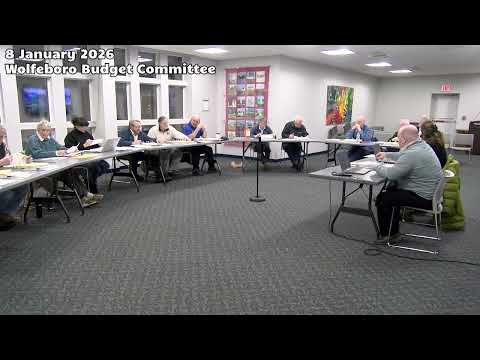
At its Jan. 8 meeting the Wolfeboro Budget Committee approved a $10,000 purchase for new code‑enforcement software, debated cuts to a Chamber-supported part‑time position and the ice‑rink subsidy, and voted to continue the final budget review at a Jan. 12 follow-up meeting.
The Wolfeboro Budget Committee on Jan. 8 approved a $10,000 line-item addition for updated code-enforcement software and agreed to continue its final budget review at a follow-up meeting on Jan. 12.
Town Manager Jim, who led much of the budget walk-through, told the committee the code-enforcement office is managing an exceptionally high inspection workload and that modern software would automate inspections and interface with the town’s permitting and tax records. "This is an area in the next couple years we are going to have to bring in another code official," Jim said, urging a one-time $10,000 appropriation to buy the software and noting it will require a modest annual subscription thereafter.
The committee voted on the motion to add $10,000 for the software and carried it by roll call, 8–1. Chair John then directed staff to note integration steps and any ongoing annual costs in the budget presentation.
Earlier in the session members examined enterprise funds and staffing lines, including questions about a frozen public-works position and how garage and vehicle-repair charges are allocated between departments. Jim explained that minor mechanical work is absorbed in the mechanic’s operating budget while major repairs are charged to the department that owns the vehicle.
A sustained exchange focused on a town-funded, part-time employee who works at the Chamber of Commerce desk. One committee member moved to remove $13,675 tied to that position — a change that, if enacted, would have eliminated the role unless the town reallocated funds. Committee members and staff debated whether that person’s duties (answering phones, assisting with community inquiries, and occasionally helping with EV charger issues) could be reassigned to other vacant positions; the motion was discussed but ultimately not adopted.
The committee also considered cutting the ice-rink subsidy. A motion to reduce the select board’s $69,790 allocation to $55,000 prompted discussion about rink usage and enterprise revenues; members cited year-to-date rink revenue of about $46,002 and debated whether rate adjustments or higher usage should cover program costs. The motion failed on a roll call.
Throughout the meeting members pressed for clarity on several revenue items — including cable franchise checks and projected municipal electric charges — and Jim said estimated revenues and the default budget materials would be prepared and circulated ahead of the Jan. 12 meeting. He asked the committee and department liaisons to review updated slides he will circulate for the public hearing and deliberative session presentations.
A resident who addressed the committee at the end of the meeting urged clearer, more engaging presentation materials for the public hearings so taxpayers better understand the drivers behind budget changes. With no further public comment, the committee adjourned.