Get Full Government Meeting Transcripts, Videos, & Alerts Forever!
Get email alerts on the Land Use topic
No spam. Unsubscribe anytime.
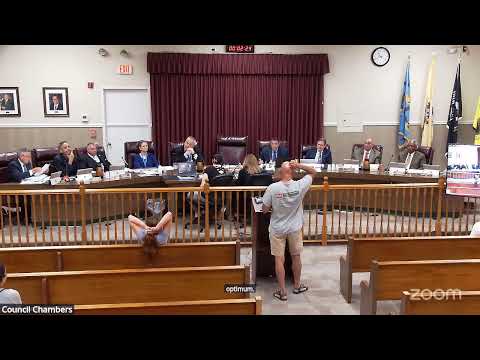
Sayreville council adopts 18‑month moratorium on large data centers after packed public hearing
Summary
After more than three hours of public comment and council debate, Sayreville’s borough council voted to impose an 18‑month moratorium on large data‑center development to allow engineering, fiscal and land‑use reviews and to develop local regulations.
A majority of the Sayreville Borough Council voted to adopt an 18‑month moratorium on large data‑center development after an extended public hearing during the July 2026 regular meeting.
The moratorium, enacted through ordinance 15‑26, pauses permitting and related approvals for data‑center projects within the borough while staff complete engineering, fiscal and planning studies and draft an administrative “toolbox” of regulations. Council president (speaker 7) said the temporary pause will let the borough “build the toolbox” and set enforceable standards before any large projects move forward.
Residents filled the chamber to speak on the issue. John Hsu (speaker 19) said AI‑style data centers use substantially more electricity and water than traditional facilities and urged a permanent ban, saying those facilities have contributed to higher power prices elsewhere. Multiple residents—including Gabriel Sodino (speaker 20), Lisonbee Hornbeck (speaker 18) and Bernie Bailey (speaker 21)—pressed for a full, permanent prohibition, citing environmental, noise and quality‑of‑life concerns.
Other speakers urged caution about locking the borough into an outright ban. A handful of participants said data‑center projects could increase tax revenue and provide some construction jobs; they argued that a short moratorium lets the borough evaluate any application carefully without immediately foreclosing development.
Council members described a range of views. Several members said they favored a permanent ban but ultimately supported the moratorium as a pragmatic step to gather data and avoid litigation. Council president (speaker 7) warned that an unprepared permanent ban could invite legal challenges and left the door open to revisiting a permanent ban after the studies the moratorium requires.
The ordinance will be in effect for 18 months during which the borough intends to commission technical studies, update land‑use standards and prepare any necessary ordinance changes. The transcript records a roll call vote in which the motion carried; individual roll‑call votes are recorded in the official meeting minutes and the enacted ordinance will be posted to the borough website.
Next steps noted by the council include assembling engineering and fiscal analyses, coordinating with the borough planner and engineer, and preparing draft regulatory specifications for future council consideration.
The moratorium does not revoke any prior approvals already vested under state law; the council and borough attorney said the ordinance is intended to apply prospectively while the borough completes its reviews.