Get Full Government Meeting Transcripts, Videos, & Alerts Forever!
Get email alerts on the Downtown Development topic
No spam. Unsubscribe anytime.
Council approves long‑term lease amendment to support downtown amphitheater despite ethics and process objections
Summary
The council voted 7–1 on June 15 to approve a long‑term lease amendment of city parkland to support a downtown amphitheater and associated "Artist Village," increasing initial lease payments and providing longer term stability for developers. Opponents raised procedural and conflict‑of‑interest concerns; the city attorney said he would review quorum and procedural records.
Winston‑Salem — The City Council approved a long‑term lease amendment on June 15 to support a downtown amphitheater project and an attached "Artist Village," voting 7–1 after a public hearing in which proponents and opponents made competing arguments about economic development, process and conflicts of interest.
Proponent Bucky Dame said the project now requires permanence and financial stability because construction has shifted from temporary structures to permanent buildings and because total investment has risen. "We needed that stability and some long term, to help us make sure that … we were covered," Dame said, adding the investment for the amphitheater is "north of $25,000,000." He also said the proposed lease increases payments to $1,000 a month for the first five years and then adjusts by CPI.
Jason Thiel, president of the downtown partnership, said there is strong public support for the amphitheater and asked the council to approve the amendment to provide certainty for investors and operators.
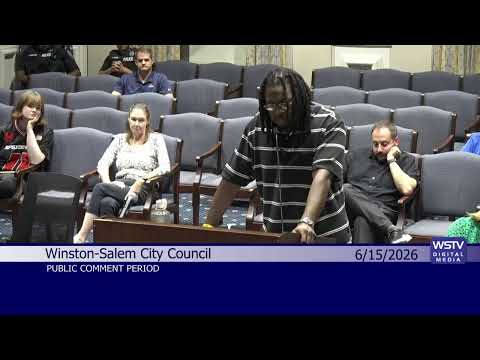
Opponents in the public hearing raised procedural objections and alleged conflicts of interest. A resident, Mister Rose, said the parks commission did not have quorum at a prior meeting and accused council members of advancing a project that benefits private board members; he urged recusal and called the process "flawed." The city attorney reviewed available records and said he would verify quorum and the commission minutes, noting the commission currently lists vacancies and that, from available documents, those present expressed support.
During council debate some members acknowledged concerns about transparency and process but emphasized that advisory boards are advisory and that the council makes the final legal decision. Councilmember Clark argued that cities must adapt and cited prior downtown zoning and entertainment‑zone changes as examples of evolving rules.
The motion to approve passed 7–1. Councilmember Burke was the lone no vote in the recorded tally. The attorney said he would follow up on the procedural questions and the ethics claims raised during the hearing.
What this means: The approval gives the amphitheater proponents longer‑term lease certainty and raises questions that opponents said require follow‑up documentation (parks commission quorum, potential conflicts). The attorney’s follow‑up and any ethics filings will determine whether further council action or remedies are needed.