Get Full Government Meeting Transcripts, Videos, & Alerts Forever!
Get email alerts on the Juvenile Curfew topic
No spam. Unsubscribe anytime.
Winston‑Salem council approves temporary youth protection ordinance after heated debate
Summary
On June 15 the Winston‑Salem City Council approved a temporary youth protection ordinance that restricts unsupervised juveniles from being in public between 10:00 p.m. and 6:00 a.m. The vote was 5–3; the council scheduled a required second reading for June 22. Supporters cited recent late‑night incidents; opponents and youth advocates urged investment in programs rather than enforcement.
Winston‑Salem — The City Council voted 5–3 on June 15 to approve a temporary youth protection ordinance that would make it a violation for unsupervised juveniles under 18 to be in public between 10:00 p.m. and 6:00 a.m. The ordinance would remain in effect until Oct. 12, 2026, and the city attorney told the council state law requires a second reading for ordinances that include fines or penalties; the council scheduled a special meeting for June 22 for that second reading.
The Police Department presented the proposal as a public‑safety measure. Lieutenant Joel Morrissette said the proposal aims to “protect juveniles from victimization and exposure to criminal activity” and that the “proposed restricted hours applies to juveniles under the age of 18 … 10PM to 6AM.” The presentation cited multiple incidents in 2025–26 and department data showing a higher share of juvenile‑involved contacts during overnight hours, and described enforcement options, a dedicated implementation team focused on prevention and engagement, and penalties for adults who knowingly allow juveniles to be out during restricted hours.
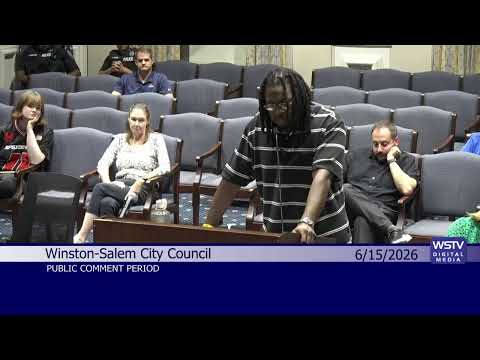
Opponents — including youth leaders and community advocates who spoke during the public hearing — said the ordinance risks criminalizing young people without addressing root causes. Phoenix Sampson Young, a senior at RJ Reynolds High School, told the council, “I am here tonight because the proposed youth curfew is deeply concerning,” and asked that young people be included in planning and that the city invest in programs, mentorship and safe spaces. Representatives from local restorative‑justice and community groups argued enforcement resources would be better spent on direct youth services.
Council debate ranged from support for a temporary, precautionary measure to constitutional and civil‑liberties concerns. A substitute motion to delay the vote was offered and defeated; the council then approved the ordinance on the motion made by Councilmember Scipio. Councilmember Andre Bowen said he would vote against the measure, arguing in part that enforcement should not criminalize noncriminal presence in public.
The ordinance, as presented, includes exceptions for juveniles accompanied by a parent or guardian, for lawful employment travel, for those traveling to or from official functions sponsored by schools or civic organizations, and for other narrow circumstances; it also allows the chief of police to issue permits in specific cases. The presentation said juveniles may be adjudicated delinquent under some circumstances and that adults charged under the ordinance could face up to $500 and a mandatory court appearance; presenters emphasized that the stated goal is compliance and intervention rather than punishment.
The city attorney advised that because the ordinance carries potential fines the council must conduct a second reading; the council set a special meeting for June 22 at 4:00 p.m. to complete that step. At that meeting the council will be able to take final action consistent with state law.
What happens next: The council’s June 22 session is scheduled for the ordinance’s second reading; if adopted after that reading the city will publish the effective dates and enforcement guidance. Councilmembers and community groups said they expect continued discussion about outreach, implementation staffing and funding for alternatives to enforcement.