Get Full Government Meeting Transcripts, Videos, & Alerts Forever!
Get email alerts on the Annexation topic
No spam. Unsubscribe anytime.
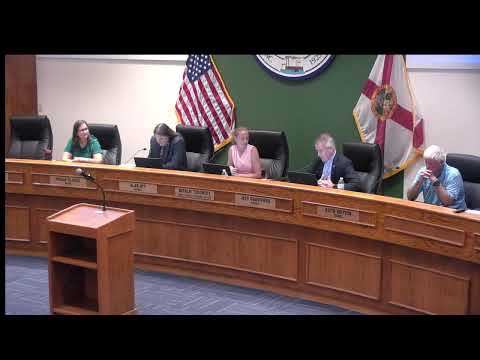
Oviedo council approves placing annexation supermajority question on November ballot
Summary
Council approved ordinance 17‑74 to place a charter amendment on the Nov. ballot that would require a four‑of‑five council vote to annex certain Seminole County rural lands; supporters said it protects the rural boundary while opponents warned it could restrict future councils’ flexibility.
The Oviedo City Council voted July 20 to place a charter amendment on the November ballot that would require an affirmative vote of at least four of five council members to annex land lying within Seminole County’s rural boundary as it existed on July 4, 2026.
The proposal, presented by City Attorney Mr. Vose, would change section 2.02 of the city charter to impose the supermajority threshold for specified annexations and directs the city clerk to work with the Seminole County Supervisor of Elections to include the measure on the ballot. Mr. Vose told the council the supervisor’s office deadline for materials was imminent and staff had prepared the required ballot summary and a Spanish translation.
Advocates at the public hearing said the measure mirrors county protections and seeks broader consensus before changing city limits. Rebecca O’Brien, a member of the 2026 charter review committee, told the council the change “doesn’t ban growth. It just ensures that any decision to bring rural land into our city limits reflects real agreement among our council, not a narrow 3‑2 split.” David Baer, president of Save Bridal Seminole, also urged adoption and described the measure as a procedural safeguard.
Opponents warned the requirement could tie the hands of future councils. Steven Shank, who said he served on the charter committee and previously on council, argued a supermajority “puts the minority in charge” and urged council members to consider whether limiting future councils’ discretion was appropriate.
During discussion, council members addressed timing and whether the item responded to a single developer; supporters said the intent was to raise the approval threshold, not to block growth, and staff answered questions about a related but distinct state law on agricultural enclaves, which applies to unincorporated county land and provides entitlements that are conceptually different from municipally driven annexation.
After public comment and deliberation, the council adopted ordinance 17‑74 for placement on the November ballot. The clerk recorded the roll call and the motion carried.
The council’s action sends the charter amendment to voters; if approved at the ballot, the charter language would take effect according to the ordinance’s specified effective date and the clerk’s coordination with the elections office.